SAJ Technical/SAJ Crown test
The first and biggest hurdle
 Naoki
Hello everyone!
I’m Naoki, a Japanese skier who gives skiing his all for life. I specialize in Japan’s SAJ ski tests and have helped many skiers pass.
SAJ Technical/SAJ Crown test
The first and biggest hurdle
SAJ Technical Prize
Even if you pass up to SAJ Level 1 smoothly skier SAJ Technical is never straightforward!
SAJ Technical like that,
This time, we will discuss the passing criteria and the differences in level compared to SAJ Level 1.
Let's take a look at the passing points for all the events!
ski proficiency test SAJ Technical Thorough investigation of pass rates and difficulty!
So, first,
Let's take a look at the pass rate for SAJ Technical!
SAJ Technical first,
Each discipline is scored out of 100, with 75 required to pass,
Total of 300 points across all four events
This is the passing line.
According to the April 2015 issue of Ski Graphic,
The national average pass rate for SAJ Technical is...
12.7%That was it!
The data showed that out of 4,121 examinees, 524 passed.

 Pochip
Personally, I find the data outdated,
There are also regional variations.
The texture felt a bit lower,
In reality, It's barely going to 10%. That's what I think.
SAJ Technical is also available for many athletes who have already passed or who have already passed the passing level,
Since it has become difficult to accurately predict the pass rate for general skiers, simple statistics tend to be somewhat high.
Considering all this,
The pass rate is about one in ten people,
It becomes an even higher and more challenging qualification than up to SAJ Level 1.
That's what it was!
Differences from SAJ ski proficiency test Technical SAJ Level 1
What is the difference between SAJ Level 1 and SAJ Technical?
To get straight to the point,
two Yes, there is.
Here it is!
- Turn speed
- Adapting to Conditions
First, these two are the basics of SAJ Technical,
Let's take a closer look here!
Turn speed
When explaining turn speed,
In more detail, it is necessary to break it down into the following two elements.
- Misalignment and Carving
- movement of the center of mass
First, about the misalignment...
Turning while shifting the skis is, in other words, the state of turning while applying the brakes.
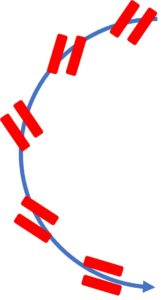
The principle behind skiing is exactly the same: the friction caused by the direction of the → you want to move and the direction of the ski kills your speed!
Unlike the SAJ Technical/SAJ Crown test up to SAJ Level 1,
You'll need an aggressive and aggressive style that keeps picking up speed.
To put it practically,
What is required of skiing beyond SAJ Technical...
Minimal misalignment
Fast Skiing
So, what does skiing with minimal deviation mean?
What kind of skiing are you talking about?
This is it!
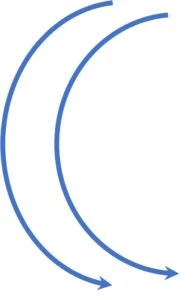
Turns where ski tracks in the snow linger,
"Carving Turn" That's what they say.
The carving turn, unlike the shifted turn earlier,
→ the direction you want to go,
You need to align the direction of the board.
In other words...
When the direction of travel and the direction of the board are aligned, you can make turns at higher speed!
First, to maximize your turn speed, you need to master the correct carving turns, and consider your step up to SAJ Technical skills begin!
movement of the center of mass
From there, to further increase turn speed,
The other key 'movement of the center of mass' That's it!
People who make turns where the board runs
It always moves significantly on the board.
To put it another way,
putting body weight on the skis is shifting the point.
If I were to say the ideal,
It's best to start from the top and finish the turn at the tail.
In terms of the sole of the foot position,
- Turn entry is closer to the toes
- The end of the turn is heel closer.
That's the image I have.
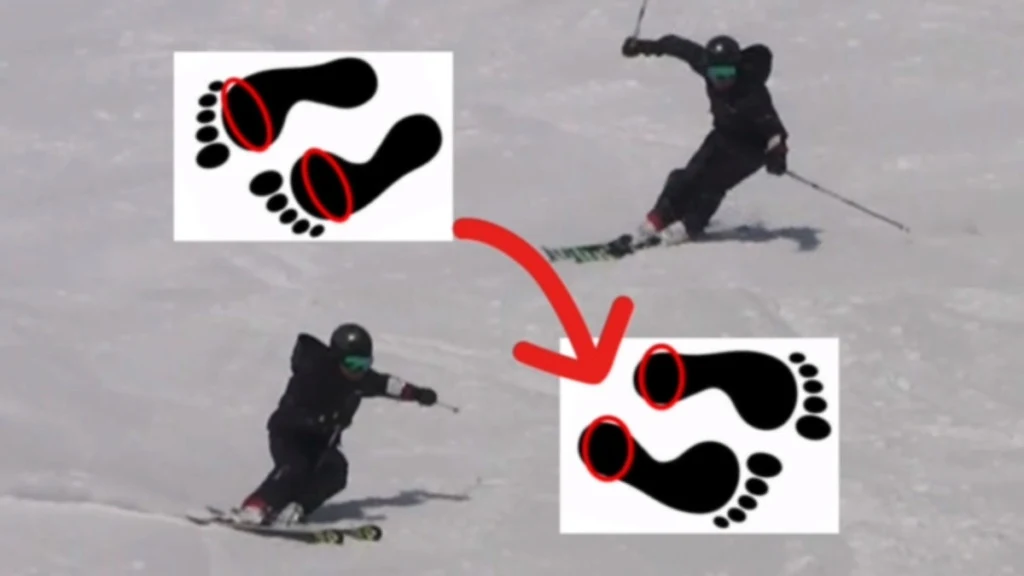
Of course, there are some individual differences,
First, keep in mind the image of moving putting body weight on the skis points from roughly toes to heel during the turn, moving toward the back / behind!
While putting body weight on the skis, pull the board back / behind from the front, and release the flex to make the ski run.
The movement of the center of mass is the movement of the body,
When this body movement stops, the board also stops, resulting in a non-running turn.
To summarize,
By movement of the center of mass from front to back / behind, you release flex and increase turn speed. Conversely, without movement of the center of mass, turn speed does not increase.
That's what it was!
ski proficiency test SAJ Technical Event-specific Strategies
Now, let's explain the key points for each category one by one!
Here is a summary of the key points for each exam and passing points.
For more detailed explanations of other points to watch out for and passing points, please see the respective articles below each point!
parallel turn long-radius turn
To break through the SAJ Technical long-radius turn,
There are three key points.
- Transition between 'extension' and 'bending' is fundamentally different from SAJ Level 1 and putting body weight on the skis.
- Control speed control in the first half of the turn and accelerate in the second half
- Shifting the position of putting body weight on the skis according to the turn phase
Putting body weight on the skis and transitioning during turns is fundamentally basic, but this movement fundamentally changes from SAJ Level 1!
- SAJ Level 1... loading the skis while flexing the legs and stretching transition
- SAJ Technical... Putting body weight on the skis and bending transition
Can you see that the movement is reversed?
This advanced technique
It's a big change from before, when I was putting body weight on the skis while carrying my own weight.
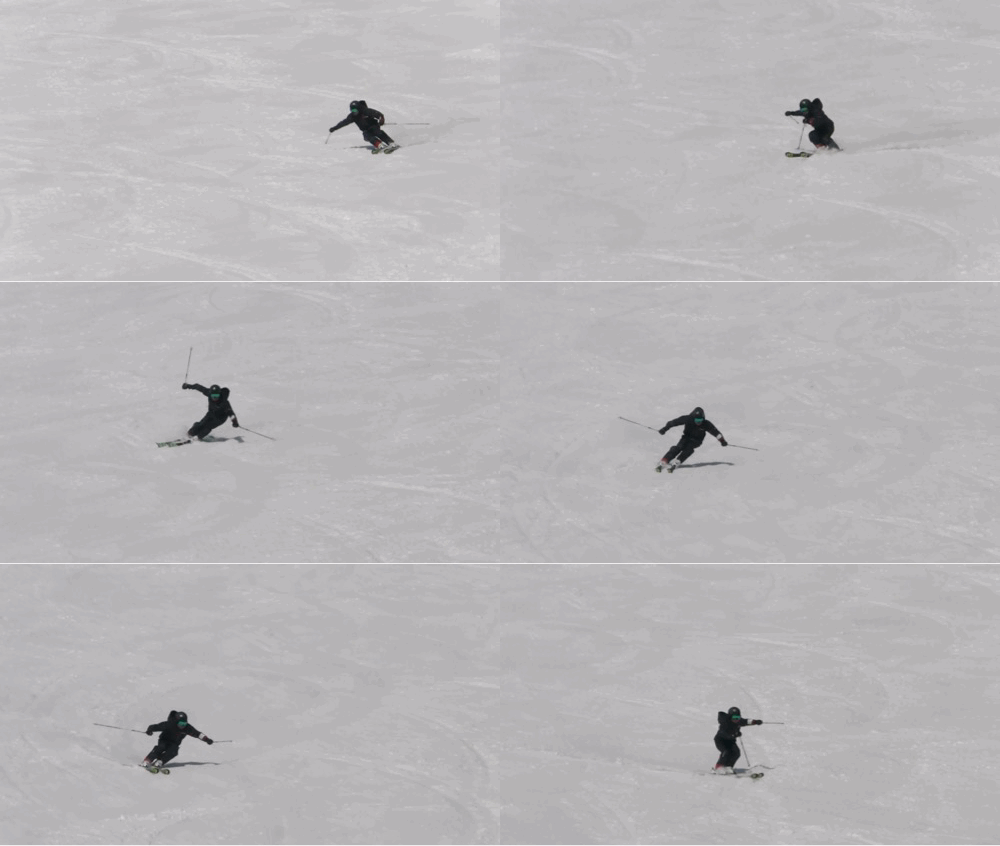
Next, let's talk about the situation where we use the offset!
In the first half, skis scrape snow and stretch the skis, putting body weight on the skis; in the second half, apply even stronger pressure to bend the skis and accelerate.
Let's create this flow!
As your speed increases, how you respond to these 'external forces acting on the skier' is also an essential factor for passing the SAJ Technical/SAJ Crown test!
The final element is the 'putting body weight on the skis position'!
SAJ Technical, you need to move positions according to the situation of the turn.
parallel turn short-radius turn
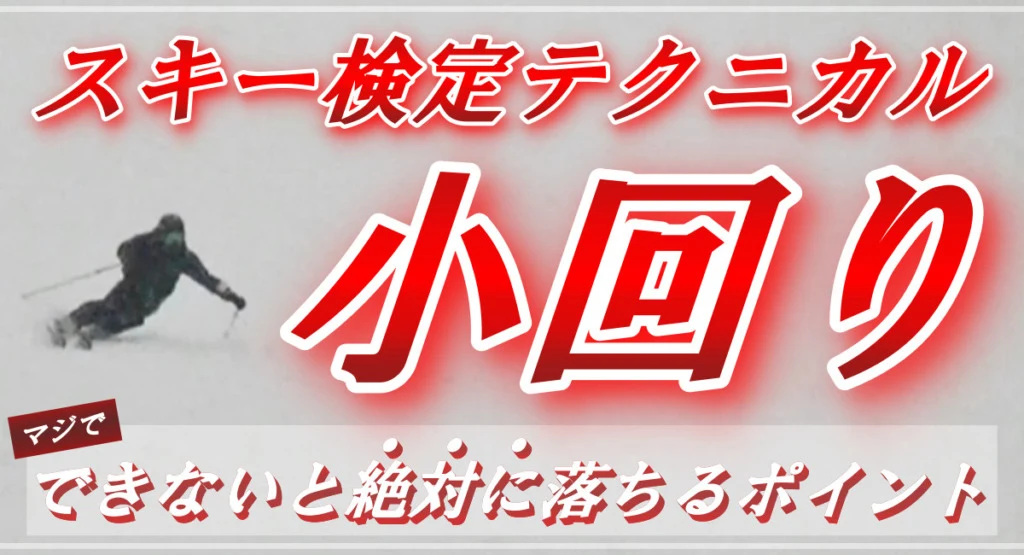
SAJ Technical short-radius turn,
There are also three key points.
- Slide around the valley to remove the skis from your body
- Transition between the ski edge of both skis
- Reduce misalignment and increase speed on the second part of a turn, after the fall line
Slide around the valley to remove the skis from your body
First, the key points around the valley are...
That's what it means.
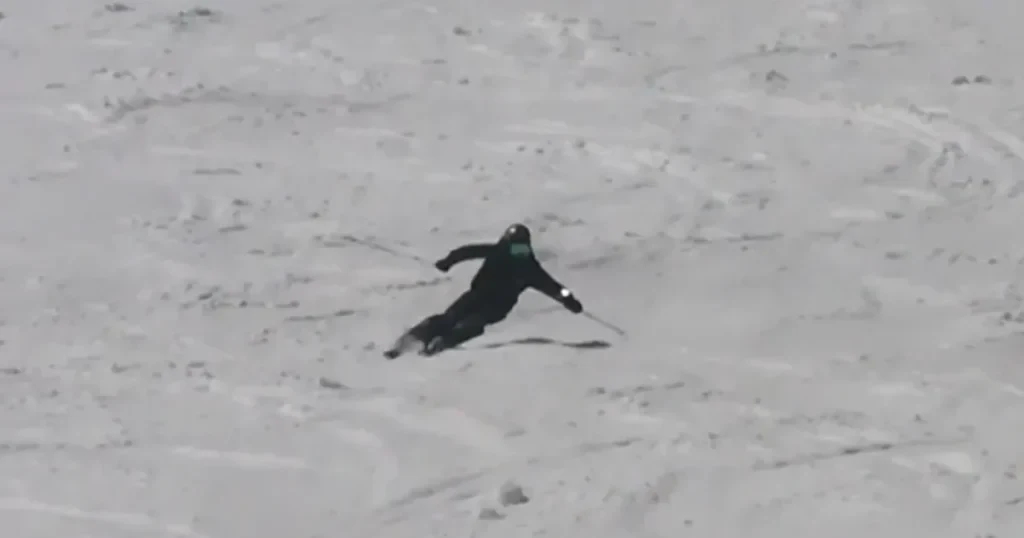
Riding the speed, I stretch my legs,
Shift your skis.
This way, I try to spend more time around the valley
If you can be mindful, you'll be able to achieve a stable valley loop!
Transition between the ski edge of both skis
The key points for transition are:
Transition between the ski edge of both skis
It may seem obvious, but
Synchronizing and transitioning both ski edge is an extremely advanced technique.
To transition the ski edge between the two skis,
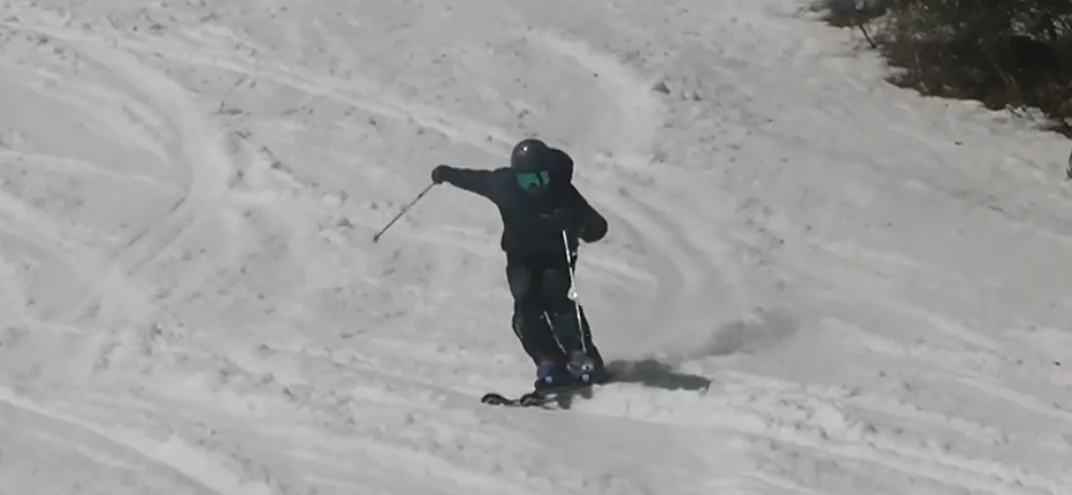
The ski edge angles and orientations of both skis are always aligned.
To make a perfect parallel turn,
Accurate synchronization from this transition was a very important point!
Reduce misalignment and increase speed on the second part of a turn, after the fall line
Finally, it's the second part of a turn, after the fall line!
The key points around the second part of a turn, after the fall line are:
Reducing misalignment That's it!
When you reach the SAJ Technical level,
Such skills are required.
In the SAJ Technical/SAJ Crown test,
It requires a completely different level of speed than before,
By minimizing misalignment around the second part of a turn, after the fall line,
Let's pick up the speed!
These were the key points for passing SAJ Technical short-radius turn!
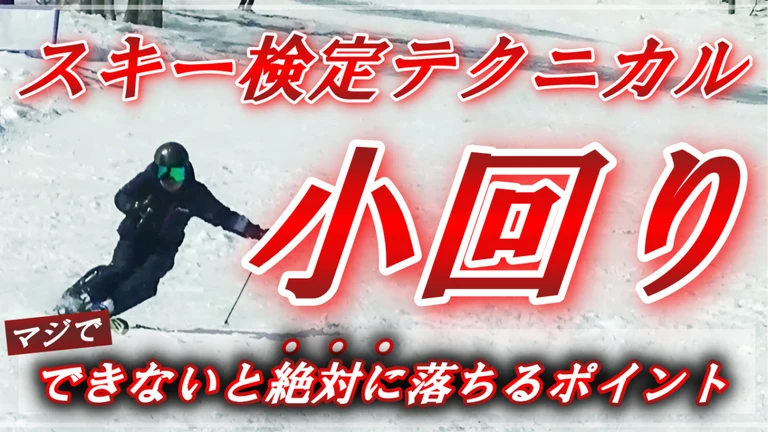
a free run combining turn sizes and rhythms (Japanese test event)
Next is SAJ Technical a free run combining turn sizes and rhythms (Japanese test event).
In a free run combining turn sizes and rhythms (Japanese test event), we will explain the passing points from the following four perspectives!
- Turn speed
- Few deceleration elements during rhythm changes / changing the rhythm
- Transition without pressure release
- Turn pivot control
Turn speed
The first is 'turn speed'!
As explained at the beginning,
The most important thing in a free run combining turn sizes and rhythms (Japanese test event) is speed!
"In a free run combining turn sizes and rhythms (Japanese test event), speed is everything."
It's no exaggeration to say that no matter how beautiful your ride is, if your speed isn't enough, that alone can lead to failure!
Of course, speed throughout the run matters, but the SAJ Technical test places particular emphasis on speed within each individual turn.
From the perfection of each turn,
Are the turns the skis running through?
Keep that in mind!
Few deceleration elements during rhythm changes / changing the rhythm
The second point is 'rhythm changes / changing the turn rhythm'!
The examiners pay close attention to rhythm changes / changing the rhythm, and here as well, the key point is...
Speed is definitely the key.
You may often see confusing explanations that say "keeping speed going until the end is important,"
In reality, you need to be careful about these rhythm changes / changing the rhythm part!
Especially in setups that go from a long-radius turn to a sudden short-radius turn,
Be careful as the difficulty is high and you may lose speed!
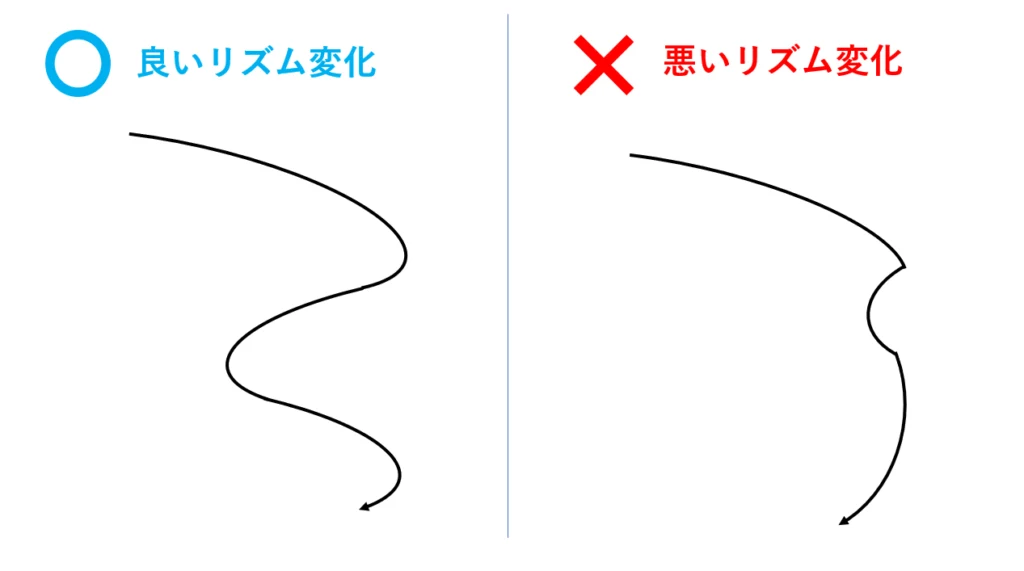
When you're speeding down a long-radius turn,
Instead of making short-radius turn rhythm changes / changing the rhythm, try to create a stable rhythm flow by making a medium-radius turn once!
Transition without pressure release
The third point is 'transition'!
If the pressure is relieved during transition,
The biggest drawback is that your skis will lose your performance!
In SAJ Technical/SAJ Crown tests, where showing skiing performance is the most important, dying on skis is a fatal flaw...
a free run combining turn sizes and rhythms (Japanese test event), many people get deducted points because they transition up during rhythm changes / changing the turn rhythm and slowed down, so transition really needs to be cautious!
Turn pivot control
The final point is the "pivot point of the turn!"
It's about where to apply weight to the snow surface from where you put your body weight.
By changing the anchor point during turns, you can effectively apply pressure to the ski.
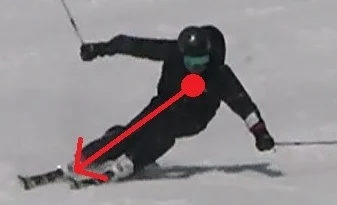
Especially in the latter half of the turn, many skiers can't lower their center of mass to put pressure on their skis, making it look like they're standing while skiing and making leg movement difficult.
In other words, on the second part of a turn, after the fall line, the key is to lower the pivot point of the turn while applying pressure to the ski, but many people keep the pivot high!
The key point around the valley is
High position around shoulder ~ chest
the second part of a turn, after the fall line is
Low position around the hip / hip joint
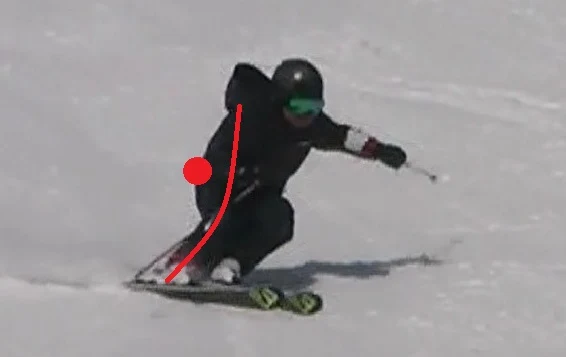
The reason for moving the Pivot so low in the latter half of the turn is,
parallel turn uneven terrain short-radius turn
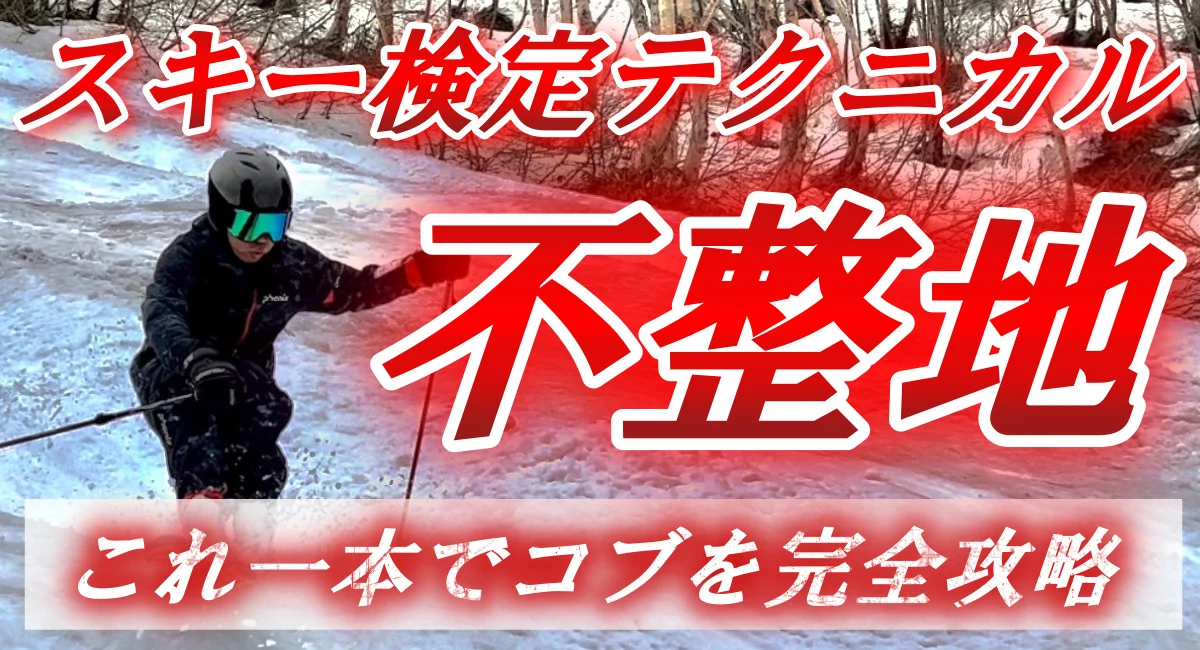
SAJ Technical uneven terrain short-radius turn is,
The difficulty is so high that I ended up with only 5 points...
- High-quality absorption
- slide smoothly and quickly
- Turn your upper body toward the valley
- Push the ski pole behind the mogul / bump
- Make time to point your skis downward.
I'll explain each as briefly as possible!
High-quality absorption
First, about the absorption function,
"High-quality absorption" What is it?
If you give the answer...
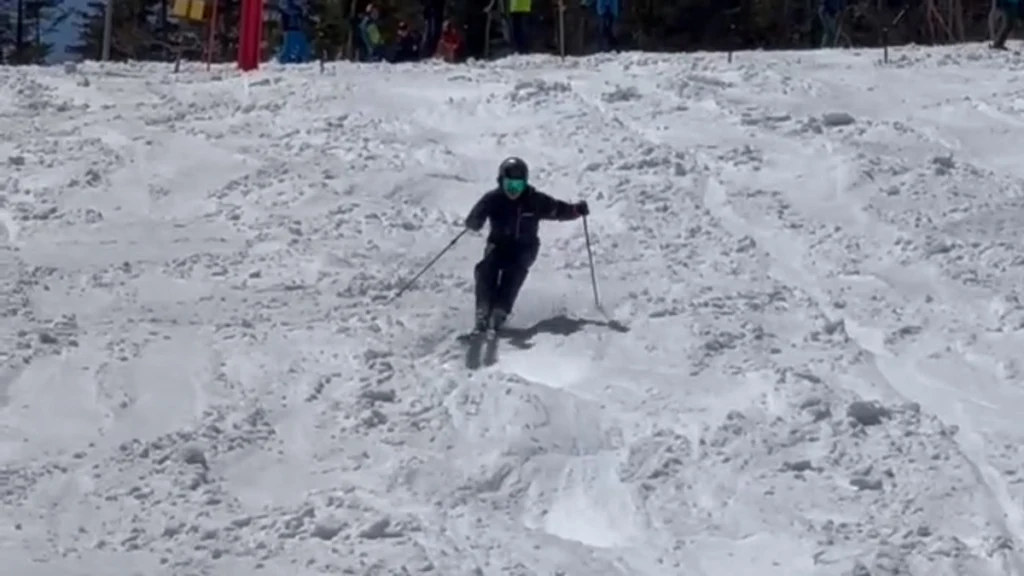
Deliberately saying only the legs is
At the timing of the absorption action, Because many people end up bending their upper body That's it!
Therefore, to achieve high-quality absorption,
Try to keep your upper body as upright as possible, and bend your legs as much as possible to absorb the material!
slide smoothly and quickly
SAJ Technical, you also need speed to get off mogul / bump, so controlling the speed of deviation is important!
How to speed up the shift...
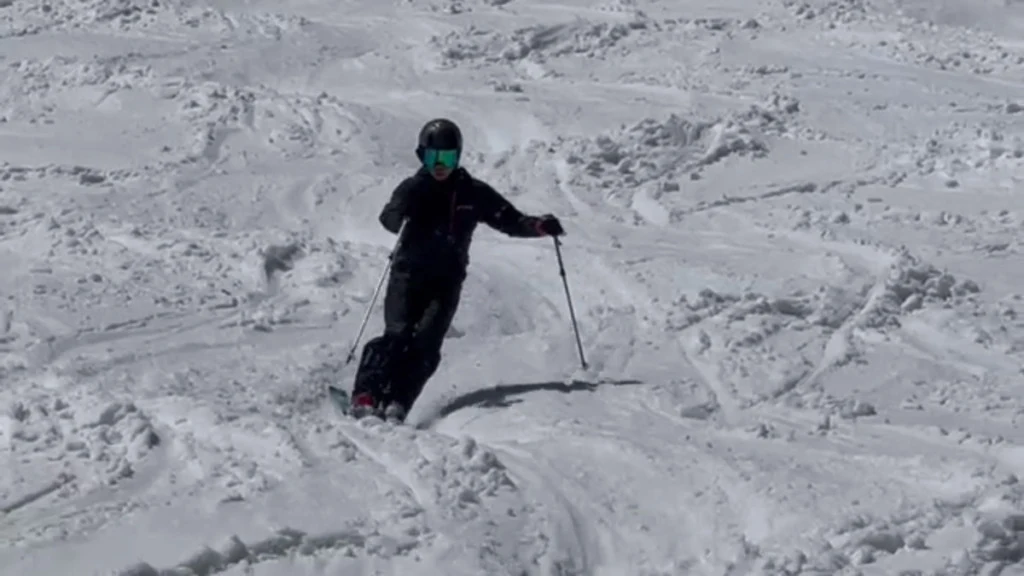
The idea is to reduce friction with the snow surface to increase the speed of shifting!
Turn your upper body toward the valley
The next point is about the upper body.
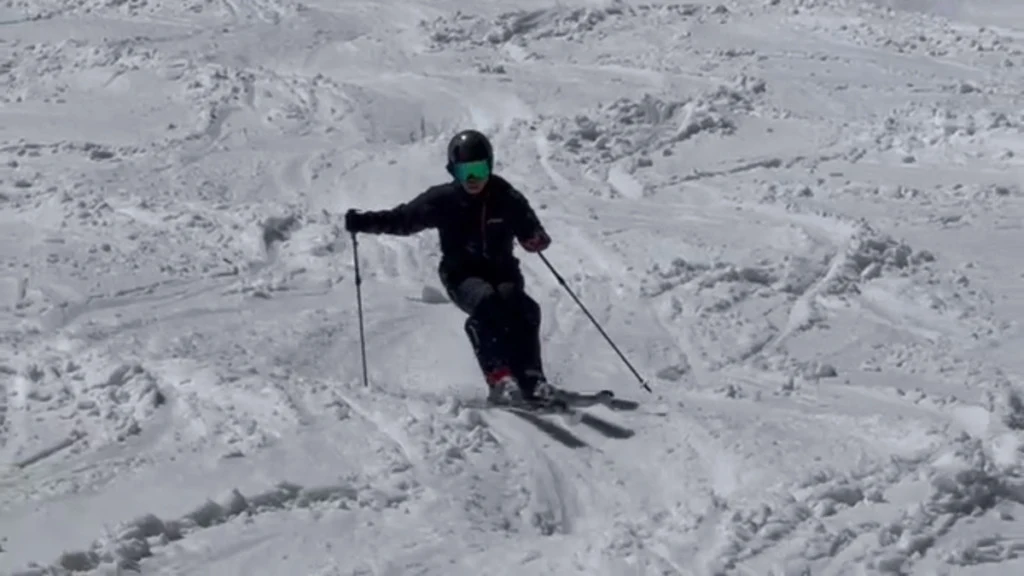
The reason is...
If you rotate your body together with the skis,
Because you can't use the offset well and can't handle mogul / bump with a fast rhythm!
So, what are the tips for turning your upper body toward the valley?
To put it simply...
reverse twist
Adjust the direction of your skis and your upper body
On the contrary, twist it!
The posture when you shift your skis is
The basic method is to create a mold with reverse twisting.
Push the ski pole behind the mogul / bump
When the ski pole is over the mogul / bump,
Let's push the back side of the mogul / bump!
The mogul / bump is often mentioned as the backside,
It's hard to imagine,
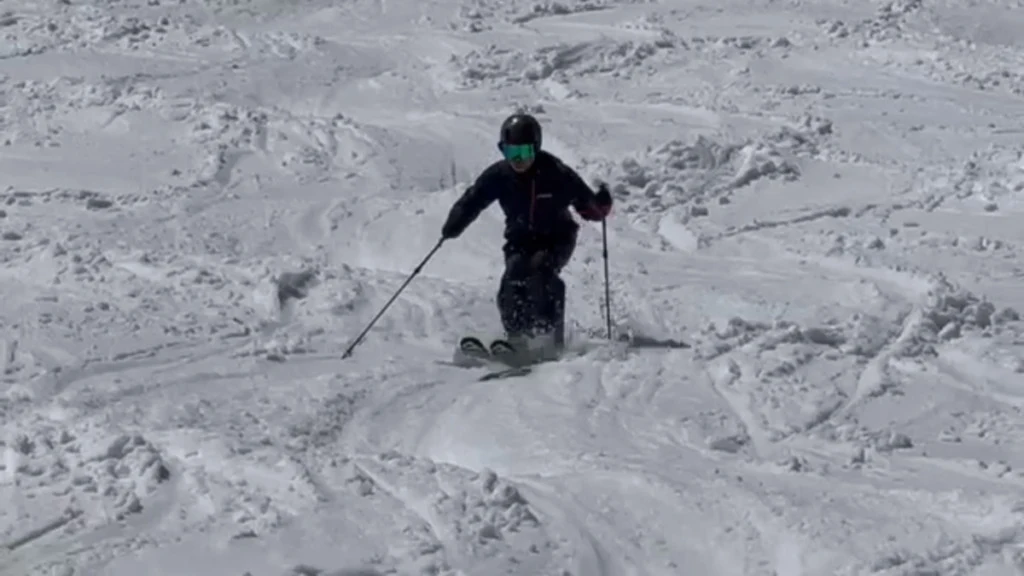
If you poke the ski pole before crossing the mogul / bump,
Since you have to hit the ski pole while descending the trough, you end up having to pick up from the upper body.
When that happens, your upper body tends to lean forward,
As a result, you become more vulnerable to impact.
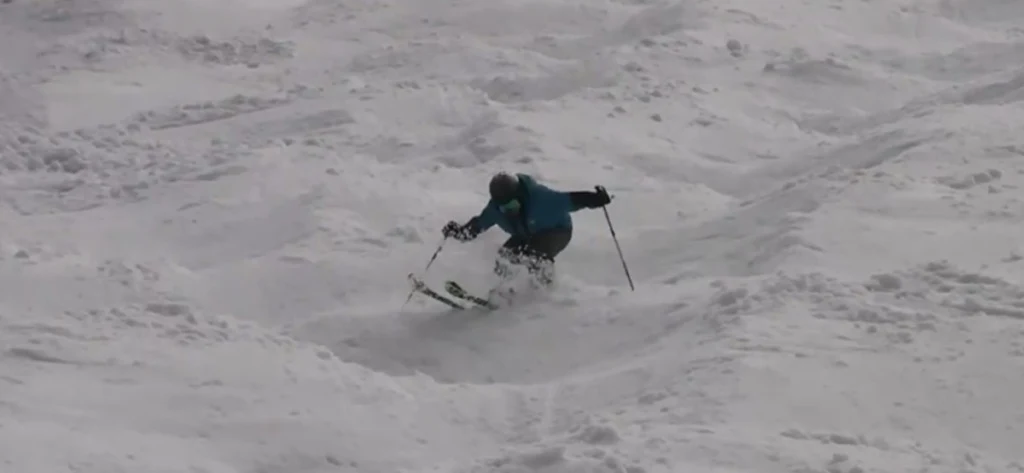
So, hold back from pushing the ski pole until you get off the mogul / bump and get over it!
Make time to point your skis downward.
The final point is after crossing the mogul / bump!
When you reach the SAJ Technical level,
Mogul / bump also requires a sense of speed,
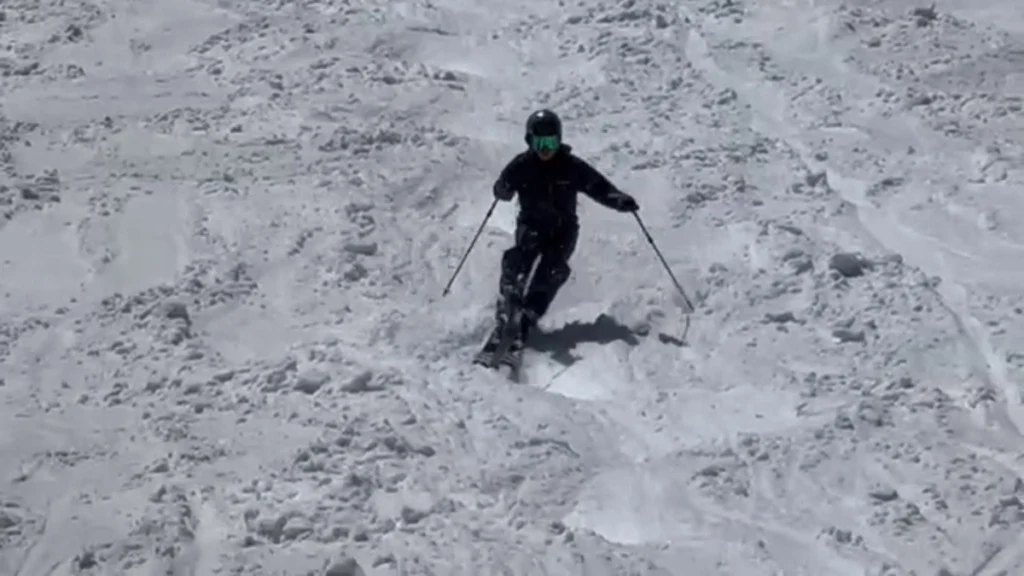
On the other hand, if you spend too much time turning your skis sideways,
There is a risk of more misalignment or difficulty creating clean turn lone inside the mogul / bump.
ski proficiency test SAJ Technical Common Failure Patterns
Now, while looking at the SAJ Technical Certification,
Here is a summary of the overall skiing trends that have led to rejection
- lack of speed
- Weak grip on the outside foot / outside leg
- Breaking up during transition
- the second part of a turn, after the fall line, so there's no pressure
* For rejection patterns in each category, please refer to each article's explanation.
That's how I listed them,
As expected, every one of them was related to "turn speed."
Regarding turn speed,
It's not simply about speeding up to the fullest,
If you cannot clear this challenge,
SAJ Technical exams will be difficult!
Of course, the turning technique is important,
Transition can also differ significantly between SAJ Level 1 and SAJ Technical.
In the SAJ Technical/SAJ Crown test,
Skiing where pressure is released during transitions tends to be very likely to fail.
Therefore, I think it's important to learn about the movement of the center of mass to avoid decompression during transition!
It's not just about "What kind of movement should I make?""What major changes have you made compared to what you've done so far?" Let's pay attention to them!
ski proficiency test SAJ Technical Summary
Now, here's the summary for this time!
SAJ Technical Pass Rate
It's barely 10% off.
Differences Between SAJ Technical and SAJ Level 1
Turn speed
Condition Adaptation
Key Points of SAJ Technical Events
◆ Long-radius turn
putting body weight on the skis and bending transition
Accelerate in the latter half of the turn
◆ Short-radius turn
Use slips around valleys to reduce the second part of a turn, after the fall line
Transition to transition the ski edge between both skis
◆ a free run combining turn sizes and rhythms (Japanese test event)
Turn speed, rhythm changes / changing the rhythm, performance structure
Raising all aspects and maintaining speed until the very end
◆uneven terrain short-radius turn
Controlling the misalignment
able to speed
So,
What did you think?
Starting with this article,
We have received many voices of those who have passed the SAJ Technical/SAJ Crown test!
Everyone, please follow us!
That's all for this time!
Please watch until the end,
Thank you very much!
- A thorough explanation of the transition for breaking through SAJ Technical long-radius turn SAJ ski proficiency test! How to improve the stepping motion
- Revealing the secret method to instantly make your silhouette look cool around ski valleys! SAJ Technical pass instantly by putting body weight on the skis from ○○!?
- [Includes Ski Video] SAJ Technical bonus long-radius turn revealed! A detailed explanation of the skillful turning techniques hidden behind high scores!
- [Ski long-radius turn Advice] How to maintain movement of the center of mass ankle transition and SAJ Technical to pass
Currently, I am sharing a video and explanation of the actual SAJ Crown certification exam I have received. is available for a limited time.
- Which event was deducted?
- What are the reasons for point deductions for failed events?
- What were you thinking about for the passing subjects?
I look back on this while explaining it through footage from the actual exam.
Grand Prize Reflection Meeting
is being streamed.
After adding the test, you can immediately watch the actual exam video, so if you're interested, please join the upcoming big reflection session!
感想や質問があればお気軽にどうぞ!
0件のコメント