 Naoki
Hello everyone!
I’m Naoki, a Japanese skier who gives skiing his all for life. I specialize in Japan’s SAJ ski tests and have helped many skiers pass.
From this time, 3 times,
We will be happy to advise you!
- long-radius turn
- short-radius turn
- uneven terrain short-radius turn
I will go in this order,
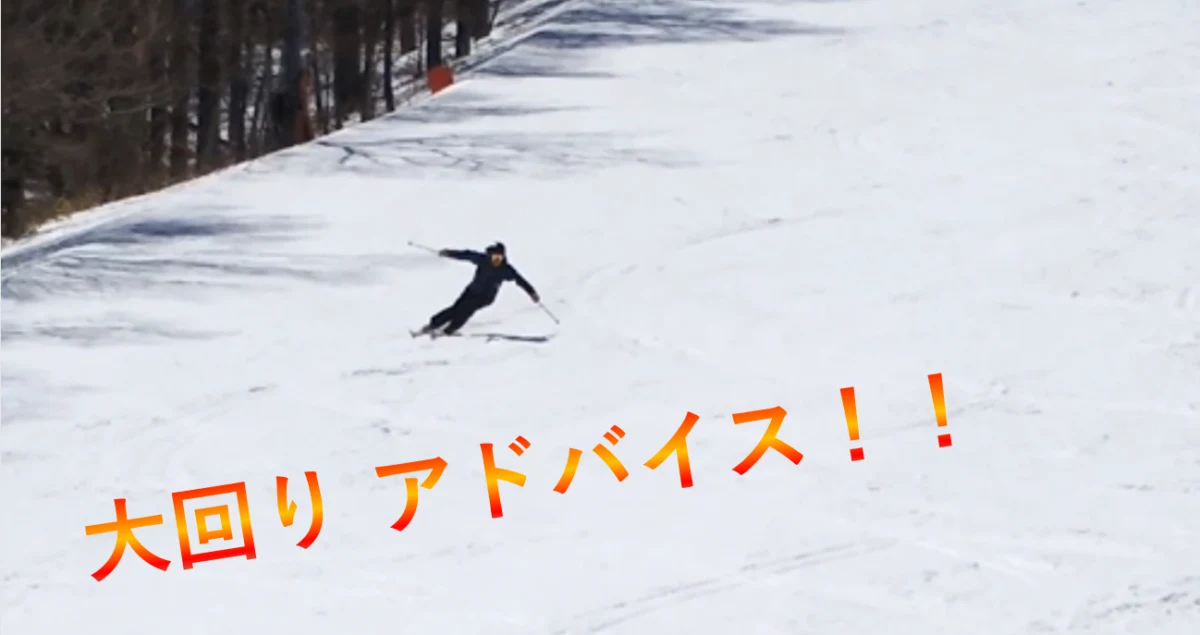
The first time is long-radius turn's advice!
The video is available from Cochila▼ so please use it for those interested! ^^
Well then!
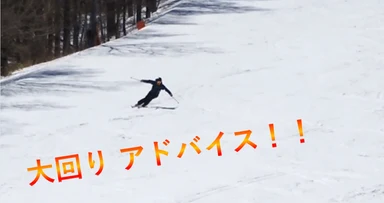
Let's watch the video of long-radius turn right away!
“Transition to cut more boots.”
Due to the slippage at this time,
I have received advice from the senior as mentioned above.
So this time I'll take the opportunity to "long-radius turn's transition to pass SAJ Technical" I would like to explain it in detail!
SAJ Technical qualified long-radius turn will be a conscious change from C letter to S letter!
I want to talk about the long-radius turn.
In the image of the turn,
Have you ever heard the words ‘C’ and ‘S’?
Let's illustrate it in an easy-to-understand way!
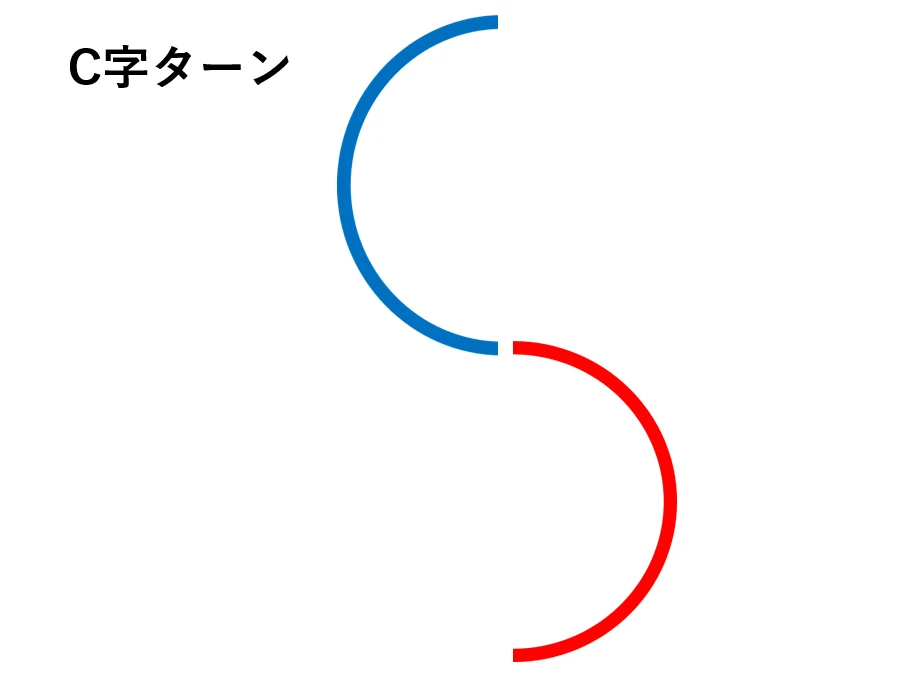
First, it's a C-shaped turn."transition~transition" You are dividing it as one turn.
This is a very common image of a turn.
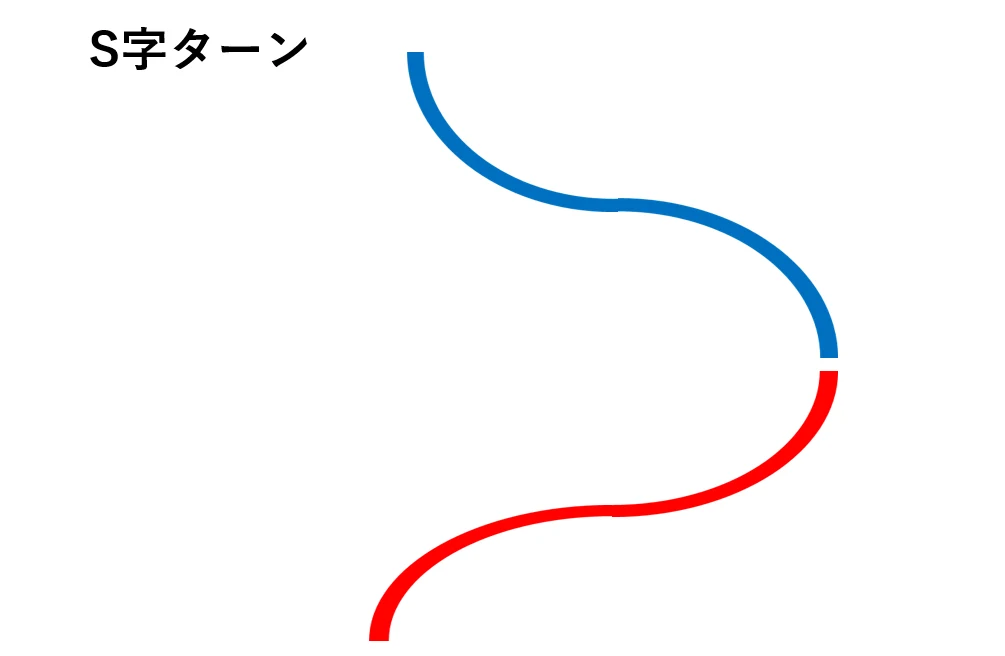
On the other hand, it is an S-shaped turn,
"Last half of previous turn ~ first half of next turn"
This is a turn image with .
For the purpose of having this turn image
- Be aware of the smooth transition
- run the board
Although this is a relatively advanced level of awareness,
First, by changing the turn consciousness from C to S, let us aim for a smooth transition!
Direction of center-of-mass movement during the transition in long turns for passing SAJ Technical
Next is the movement direction of center of mass in transition!
When I first saw the video,
There was one thing I was concerned.
That's...
Any turn, when entering the turn There was a moment when the pressure seemed to be gone!
The cause of this is
This 2 is one of them!
- transition drops center of mass too far in the valley direction.
- Body opens too far to the inside of the turn
And, This 2 is happening in conjunction.
So!
Here, I will first explain the direction of movement of the center of mass.
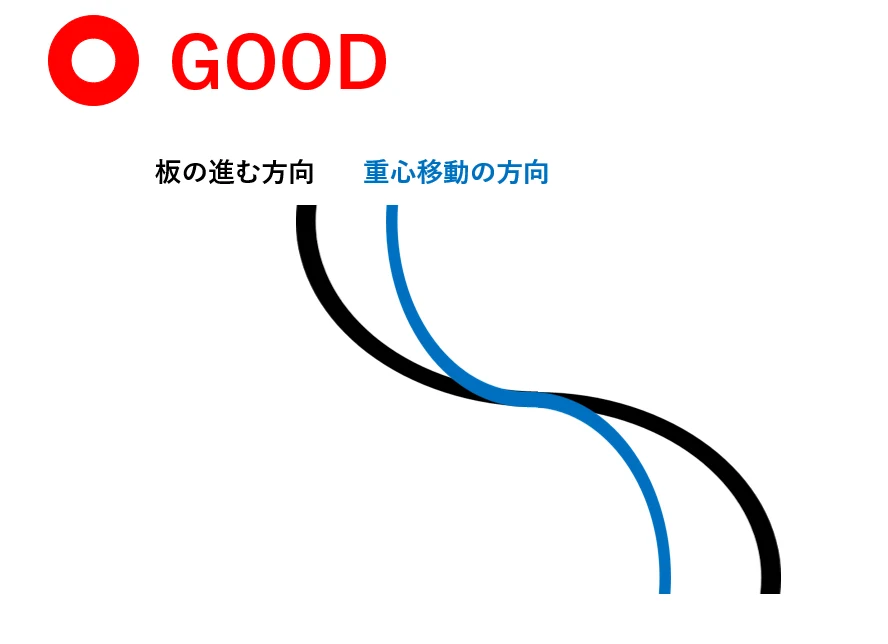
First is the ideal movement of the center of mass.
center of mass is following the orbit of ski / skis.
I would like to see crossover, especially in the transition.
I think you will see that the board is moving in a direction (withwarding) transition.
This becomes transition with downhill distance between turns,
Connecting the flow to a smooth transition!
Now let's look at a bad example!
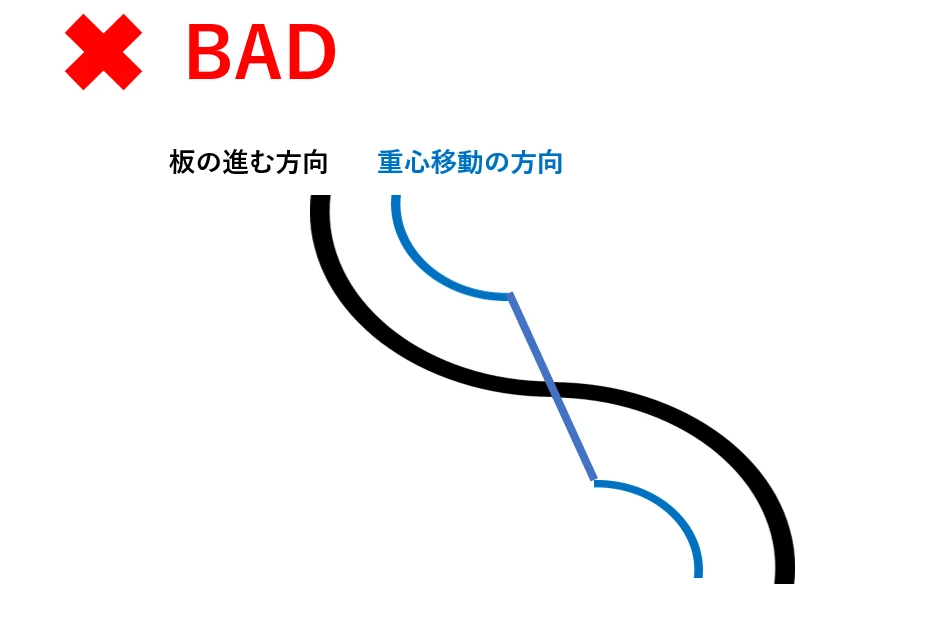
This can be seen in cause ① above.
It’s going to be a transition that is too much down the center of mass towards the valley!
To some extent, the direction in which the board moves
The orientation of movement of the center of mass is correct, but
With this, when entering a turn,
The center of mass and the board are too long away, it looks light.
And, Dropping your center of mass downhill all at once leads to cause ②: turning your body too far toward the inside of the turn. It is thought that these are occurring in conjunction with each other.
The term is “upper body facing toward the inside of the turn relative to the ski.”
When you go into the turn, we are just overwhelmingly dropping center of mass to the valley side so let’s know about the transition that goes in the direction of the board!
SAJ Technical qualified long-radius turn one point! How to keep an ankle stress.
One more thing,"ankle's tension" I will talk about the keyword!
“Transition to cut more boots.”
Advice from my seniors,
I thought that would lead to “Ankle is slowing down!”
In magazines and DVDs "ankle's tension" The word comes up often.
To put it another way,
“My shins are up.” You can also say that.
What's not good about these...
The position drops drastically to back / behind
That's it!
If the position is back/back in turn, then the body can be put on, so you will not be able to putting body weight on the skis in a position that strength communicates to the board.
Looking back at the advice of my seniors,
It says, "Like crushing the tongue of a boot."
ankle loosens → shin rises → shin comes off from tongue
That's how it works.
To keep ankle tense here,
We'll show you how to do it right away!
The method is as follows: 2.
- Keep your toes lifted upwards
- Keep your toes curled downward (middle)
At first glance, the movements of 2 seem to be opposites, but
Any of the ankle tensions are kept, and you can stick firmly so that the angle of the foam does not rise!
I lift my foot in one way during the sliding (especially when entering the turn).
There are quite a few people who ski using method ②, so
Either conclusion is fine.
This one point is that you can move your foot finger right now in the land or shoes, so try it easy to do.
[Summary] SAJ Technical's advice for passing long-radius turn
So, here's the summary!
- Awareness changes from C-shaped turn to S-shaped turn!
- In transition, the transition consciously makes center of mass moving in the direction of ski/skis.
- Keep an ankle tension, either lift or lower your foot finger in the shoes!
So,
What did you think?
This time, we’ve been focusing on the transition of long-radius turn.
Be aware of smooth transition and you can have a downhill distance between turns transition, and you think you can go around the valley with weight even in the next turn, so try it!
Next time I will give you video advice on short-radius turn!
Well, that's it for this time!
Please watch until the end,
Thank you very much!
感想や質問があればお気軽にどうぞ!
0件のコメント