 Naoki
Hello everyone!
I’m Naoki, a Japanese skier who gives skiing his all for life. I specialize in Japan’s SAJ ski tests and have helped many skiers pass.
This page is a glossary of technical terms for skiing.
I don't know what the word means, look at it and see its explanation!
From the terms of ski technology to the description of tools, we explain a wide range of specialized terms on ski!
If you’ve read this article on the site or have any words that you don’t know about reading other videos or magazines, try it!
index
Terms related to how to slide skiing
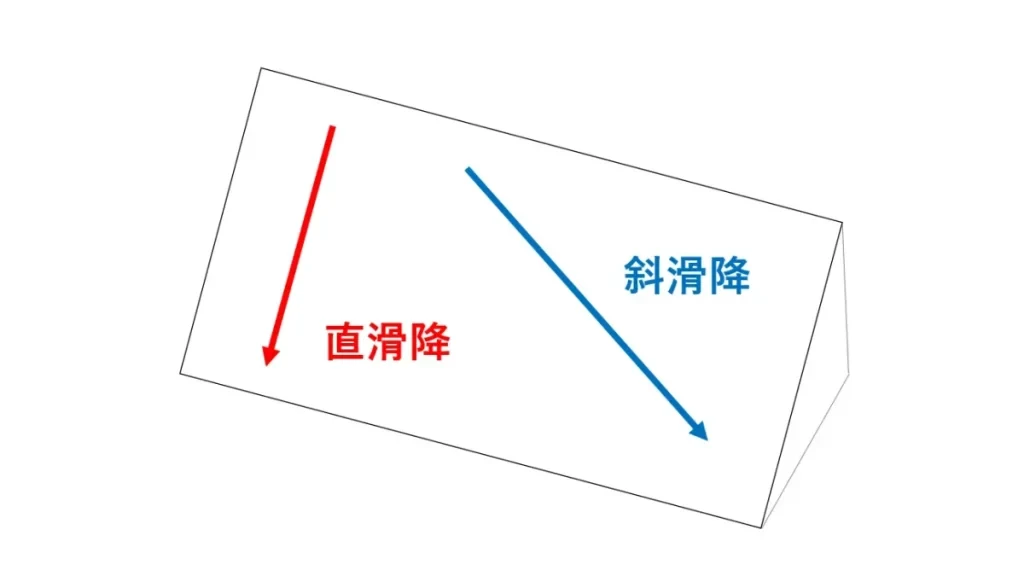
straight run | gliding straight down |
traverse | Skating diagonally across slope |
wedge turn / snowplow turn | The ski edge is a ski edge, which takes snow-level resistance and controls speed while turning. |
straight wedge glide | The ski hassle is a sliding down straight without changing direction while controlling speed. |
C shape | About Prouxtance |
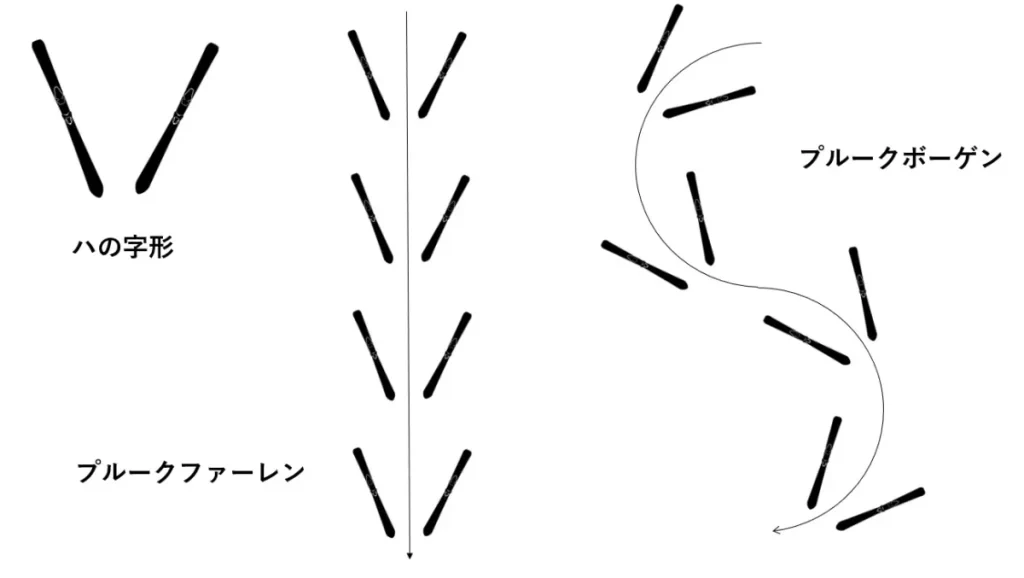
sideslip | The skies are either straight or sliding down and sliding. It was used as a SAJ level 1 test. |
carving | Skiing is less, leaving sharp ski tracks in the snow while controlling speed and progress direction. The ski edge is often called carving. |
| When turning, open the ski to the hassle and go into the turn, and as the turn goes on, gradually put inside ski to outside ski and round the board in direction. | |
basic parallel turn | The basic sliding to turn both legs together. Instead of being a perfect round turn, it is indicated to the kind two-foot turns that slide and keep speed while using the plate's shell big. For the SAJ level 2 testing, this basic parallel turn is used as a test type. |
parallel turn | Always turn both legs together. The speed and accuracy of the basic parallel turn are higher than the basic parallel turn. The difference between the basic parallel turn and the basic parallel turn is unclean, so the bigger difference is whether or not you will enter the carving element in the first half of the turn. |
| The turn is small, with the rhythm’s fast linked turns. | |
| The rhythm is linked to the linked turns. | |
| The competition is a free turn from start to goal in the determined course, with speed and turn technology performance composition being allocated. | |
rhythm changes / changing the turn rhythm | Changes in size and speed of the round arc. |
skitting | The course of the skies. It is also simply “slip”. |
| stance | The distance between your feet. |
wide stance | Strongly stretching both legs. and a large-scale slide. |
closed stance | The two legs are shed and completely closed. or in the condition of the |
Terms related to body parts in skiing
uphill foot / uphill leg / uphill ski | When you stand on the slope or leak, your feet come up. The next is the outside foot/outdoor leg. |
downhill foot / downhill leg / downhill ski | When you stand on the slope or lay down, your feet come to the bottom. The next step is inside foot. |
outside foot / outside leg (outer leg/outside ski) | The orbit of the turn is half a circle, and the foot that passes through it. The outer foot/outer leg is a basic way to turn. |
inside foot / inside leg (inner leg/inside ski) | The orbit of the turn is half a circle, and the foot passes through it. |
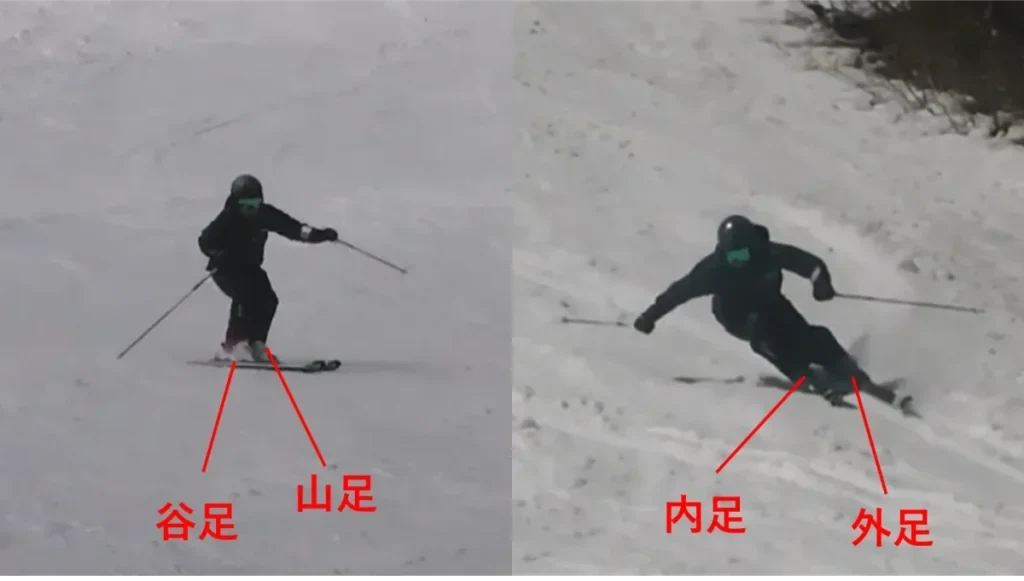
skiingTerms related to movement during skiing
fall line | The direction that goes straight down towards slope. |
the second part of a turn, after the fall line | This refers to the second half of the turn. The fall line is the transition. If the orbit is half-circle, it will be up to the second half. |
valley area | The first half of the turn. The transition to fall line. When the orbit is half-circle, it will be up to the top half. |
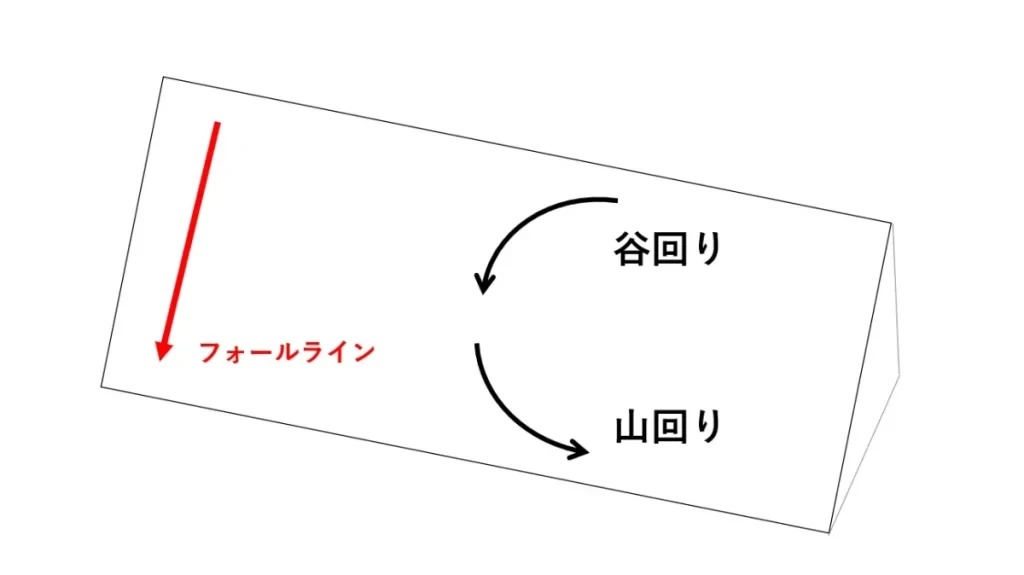
steering | Decide the direction to move on by drawing a turn arc. |
| Connecting the turn and the turn. The edging of skies is switched to the right. | |
crossover | In transition, the center of mass in your body will be replaced by skiing from the end to the first half of the next turn. |
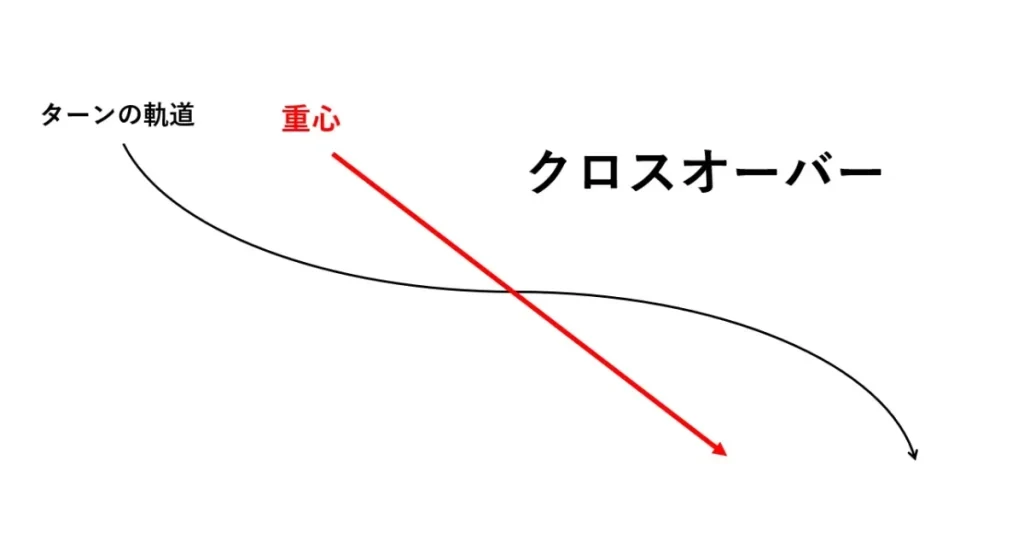
putting body weight on the skis | Weight on your feet and pressure on the snow. Again about the action. |
edging | Tilt ski / skis and stand ski edge on the snow surface. |
rotation | The movement of rotating skiing while sliding. |
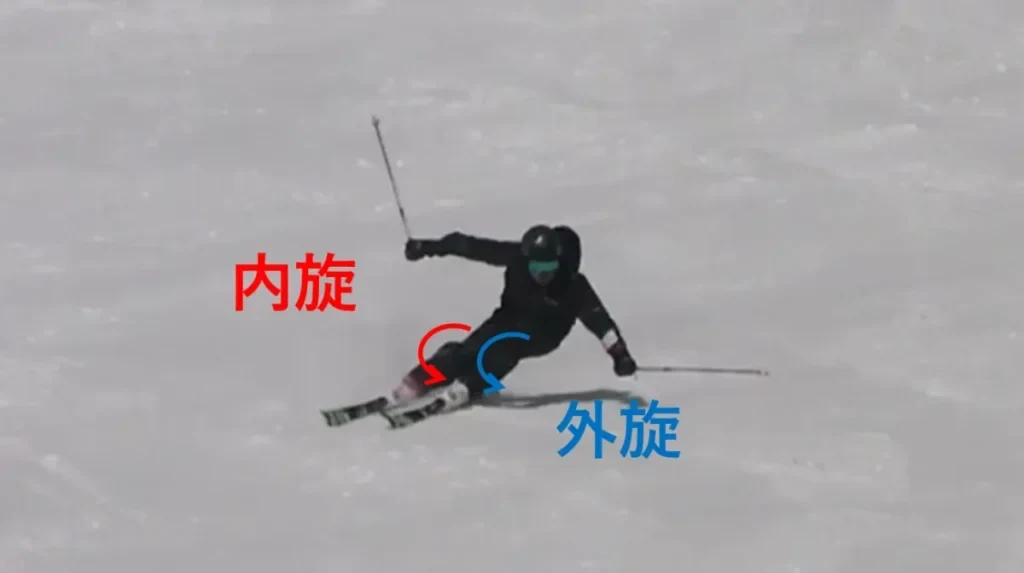
internal rotation | The movement to turn skies inside. The outer foot/outer leg is the main movement. |
external rotation | The movement to turn skies outside. It is the main way to turn inside foot/inner leg. |
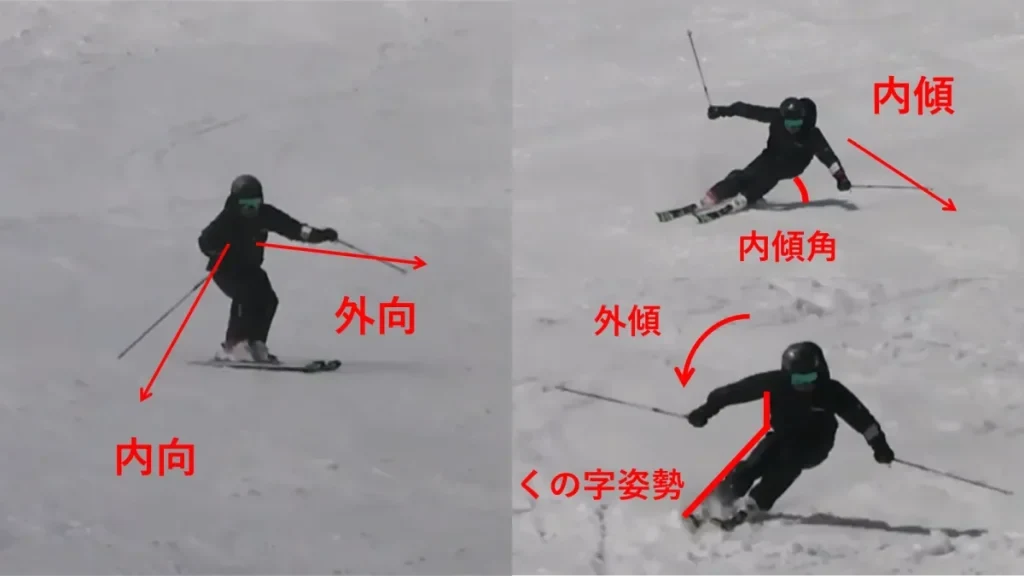
extroversion | When turning half a circle, turn your body to the outside of the circle. When you go into the turn, making a countered position to turn your seat out and make it easier to clean the first half. |
| upper body facing toward the inside of the turn relative to the skis | Turn upper body or downward. Extremely upper body facing toward the inside of the turn relative to the skis, it can change the direction of ski and cause slowdown. |
external leaning | The most important technology in skiing. The motion to putting body weight on the skis to outside foot/outdoor leg is a movement that makes the body tendance to carry the weight to the foot through the turn outdoors. It is important to be aware of the weight from the outside shoulders and outer edges. Beginner is advised to start by mastering this outward trend first. |
introversion | The tendency to the inner turn that appears in nature to tolerate the distant mind power during the turning. It is not to focus on the tendency of self, but to indicate the tendency of nature. You can also create a inner-wing by swinging from yourself, but the leaning too far inside and losing outside-ski support is quite likely. |
angle of body inclination into the turn | An angle created by inward tilt |
a countered and angulated stance | The language that is external + external will be external. Specifically by external inclination, you will be able to run skiing by pressing outer foot/outer leg and creating a pressure-to-out body at the end of the turn. |
an angulated, bent-at-the-side stance | The silhouette calls appear outside of the body during turning. The word “b” is called an angulated, bent-at-the-side stance. |
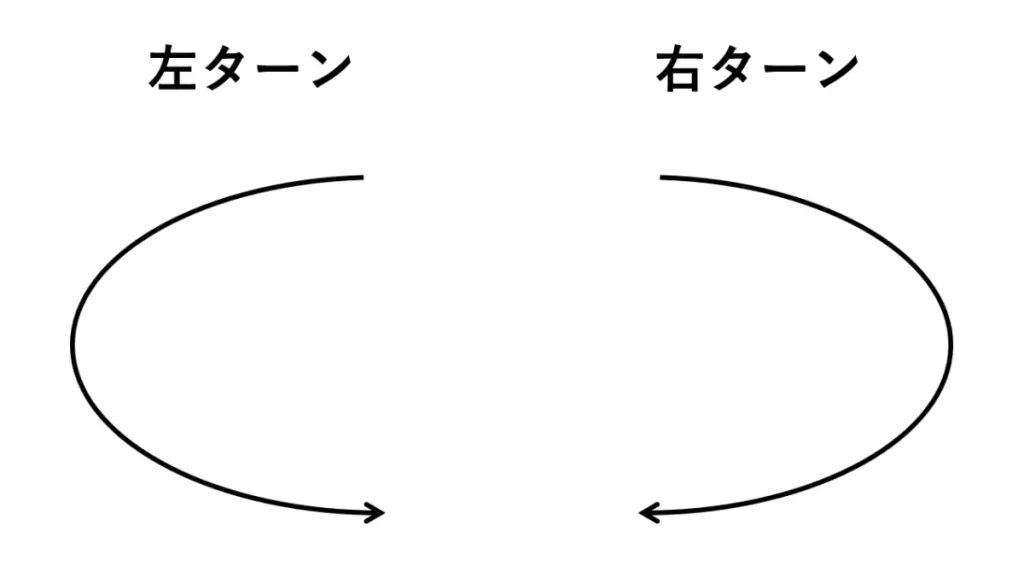
| right turn | The turn to the right. The right foot outside / the outer foot is a wrong turn and error. |
left turn | The turn to the left. The left foot outside / outside foot turns and errors. |
skiing Terms related to tools
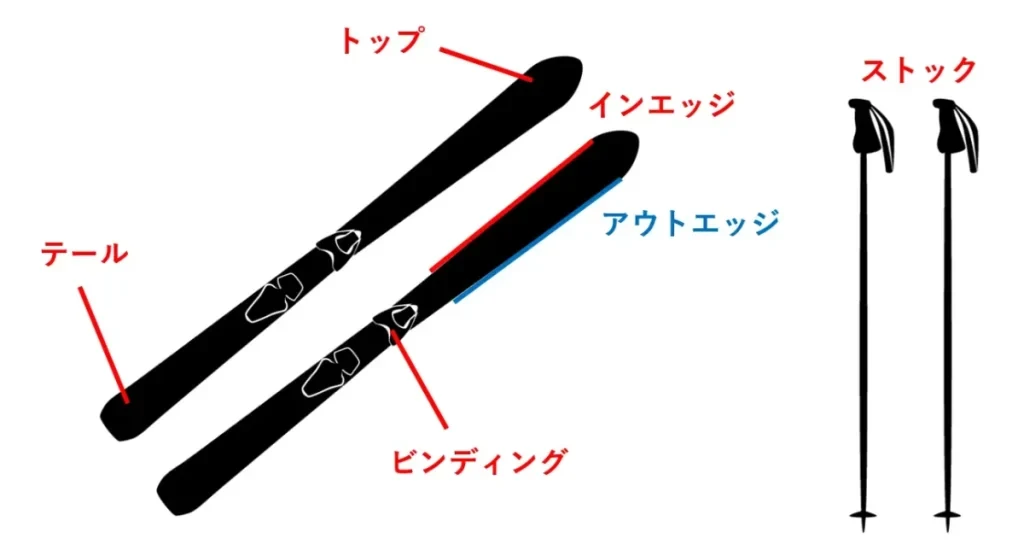
Home | Name of the tip of skiing |
| tail | Name of back / behind part of skiing |
ski edge | The corners at both ends of ski base of skiing |
| Inski edge | Ski edge located on both sides of the body. It is easy to mix with the inside foot/interior leg ski edge and the inside foot/interior leg ski edge, so you need attention. It is also the Inside Ski Edge. |
Out ski edge | Ski edge is located on both sides of the body. It is easy to mix with the outside ski edge or the outside foot/outdoor leg ski edge, so you need attention. It is also the outside ski edge. |
ski pole | The stone in both hands when running. Take the rhythm of your movement or balance. Paul also says. |
stopper | The stickers on the board so that ski/skis does not slope when they are uninstalled. When the boots are placed on the board, the stoper is up and when it is removed, it is a system that goes down. |
binding | The ski shoes are fixed on the ski/skis. It is also called Binding. |
boots | Shoes exclusively for skiing that can be attached and fixed to skiing |
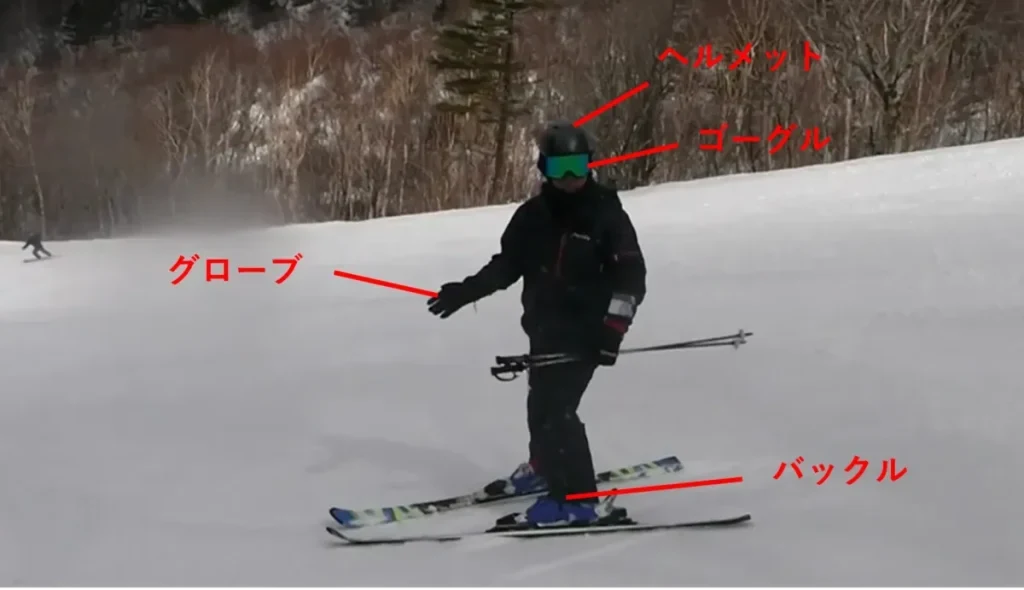
buckle | A clasp for boots. The strengths of the fixing are individual, but all the fixed memories are better to match. |
sole | The boat in the shoes. It is also called insulin. It can also be made according to the foot shape, and the salt fit on the feet can add more properly strong pressure to the snow surface. |
helmet | A protective tool to protect your head. It is made of grapes. In recent years, the Japanese ski tech selection competition has also been obligated to wear players. |
goggles | Glasses to protect your eyes from UV light. The lens' colors and performance are different, some of which make it easier to see the snow shrimp and can adjust its brightness. |
glove | Gloves worn on hands when performing skiing. |
midler | Winter clothing that is cut between outerwear and underwear |
Terms related to wax supplies
wax | Painting on the back of ski/skis to improve sliding. |
start wax / finishing wax for the start | Painting wax before the competition. It is mainly used to speed up the initial pace immediately after starting. |
scraper | After painting wax, long-quartered tools used to scratch. |
iron | Iron is used to solve solid wax and penetrate it into the plate. Not a iron for the house. |
remover | Use wax before it is placed and completely remove the fusion attached to the ski base, while also removing oil dirt. |
brush | It is used to remove the ski base. Use before and after waxing. |