A new event is born in ski proficiency test SAJ Level 1!
The name is also...『a free run combining turn sizes and rhythms (Japanese test event)』!
2020/21 From season
sideslip has disappeared from the SAJ Level 1 test items.
a free run combining turn sizes and rhythms (Japanese test event) will be revived instead! !
 Naoki
Hello everyone!
I’m Naoki, a Japanese skier who gives skiing his all for life. I specialize in Japan’s SAJ ski tests and have helped many skiers pass.
Added as a new type since 2014.
sideslip, which has been bothering SAJ Level 1 test takers, is gone. a free run combining turn sizes and rhythms (Japanese test event) will be revived instead!
This『sideslip→a free run combining turn sizes and rhythms (Japanese test event)』changes to
It is a good or bad change for the participants.
Since it is a great opportunity,
This time, such a new event,"Tips for getting a high score on a free run combining turn sizes and rhythms (Japanese test event)" I will tell you!
Acting composition, rhythm changes / changing the turn rhythm, etc.
There are a few tips for the whole, so you can see it until the end.
▼Click here to listen to the audio!
(You can also play in the background!)
.standfm-embed-iframe { height: 190px; } @media only screen and (max-device-width: 480px) { .standfm-embed-iframe { height: 230px; } }
ski proficiency test SAJ Level 1's new event! What is “a free run combining turn sizes and rhythms (Japanese test event)”?
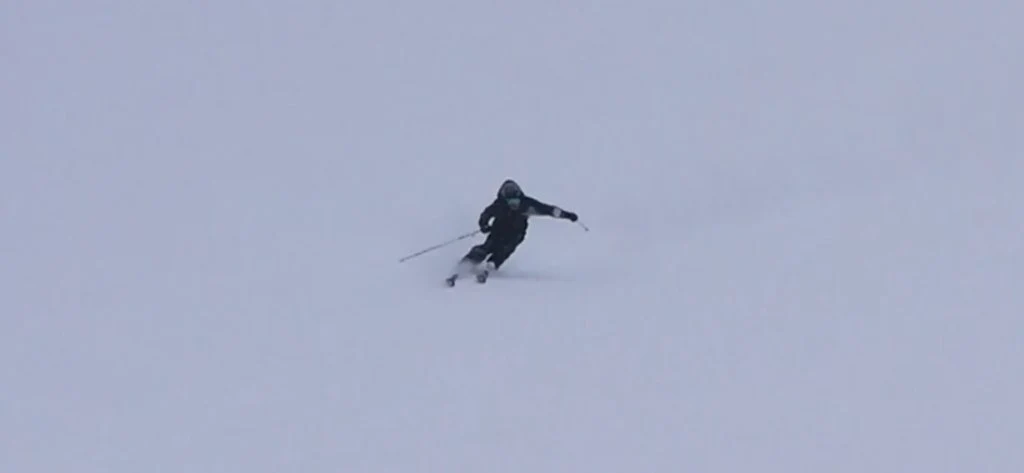
A free run combining turn sizes and rhythms (Japanese test event), but I think you can imagine what kind of SAJ Technical/SAJ Crown tests or SAJ Technical choices are ever seen.
In the determined bars, free to decide the turn composition from start to goal and in which speeds and techniques are revealed. (Total or free)
There are no rules for this!
really “Freestyle” event It feels like!
So, in such a free discussion,
- What points are you seeing?
- What else is NG?
Let's take a closer look!
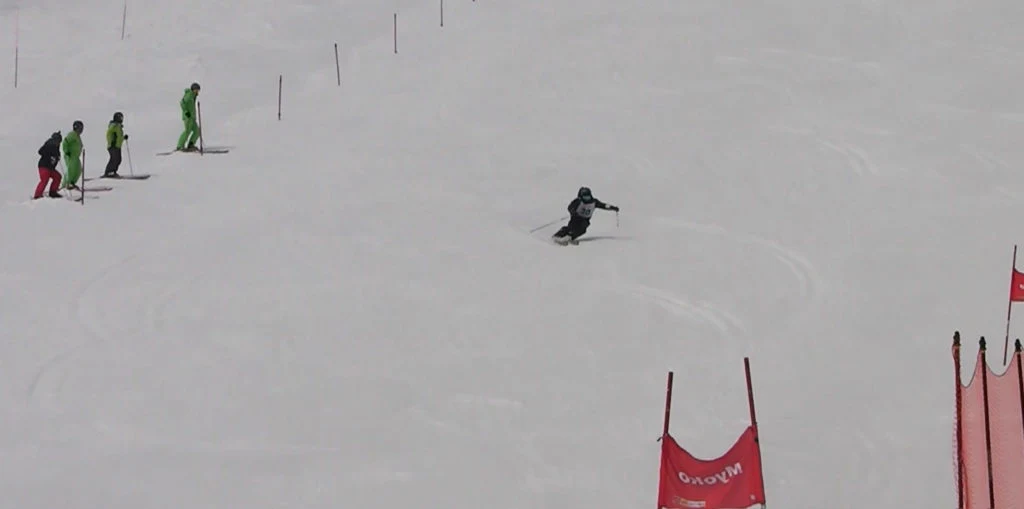
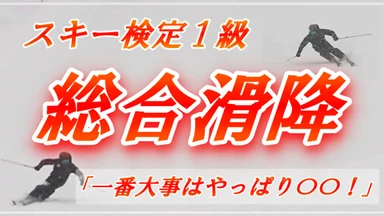
Sample of a free run combining turn sizes and rhythms (Japanese test event) of ski proficiency test SAJ Level 1
What I noticed about this slide was:
“Go to the goal without slowing down.” That's it!
I have a little comment on the video, but I will explain it in detail!
Points seen in a free run combining turn sizes and rhythms (Japanese test event) of ski proficiency test SAJ Level 1 test
The points I will talk about here are:
In the SAJ level 1 or above, it is important to do the same.
The points of a free run combining turn sizes and rhythms (Japanese test event) are the following 3!
- Speed
- rhythm changes / changing the turn rhythm
- Acting Composition
Key points of a free run combining turn sizes and rhythms (Japanese test event)① Speed
First of all, the second point of 1 is 'Speed' That's it!
First and foremost,
Connecting speed from start to finish
This is the most important point in total!
If you slow down in the middle or at the end,
It gives a bad impression and will result in points being deducted.
Therefore, at the start of a free run combining turn sizes and rhythms (Japanese test event),
Everyone is going to get fast and go out!
I start with it, and I like to feel very much. Be careful not to get too impatient and go out of control!
Like SAJ Level 2, if SAJ Level 1 goes out of control, 1 will be out!
Points of a free run combining turn sizes and rhythms (Japanese test event)② rhythm changes / changing the turn rhythm
2The second point is『rhythm changes / changing the turn rhythm』That's it!
A free run combining turn sizes and rhythms (Japanese test event) allows you to swim freely together with any size of the course.
Therefore, examiners focus on the following:
change the size of the turn "rhythm changes / changing the turn rhythm moment" That's right.
It seems like it will kill your speed here.
Please note that rapid rhythm changes / changing the turn rhythm will result in points being deducted!
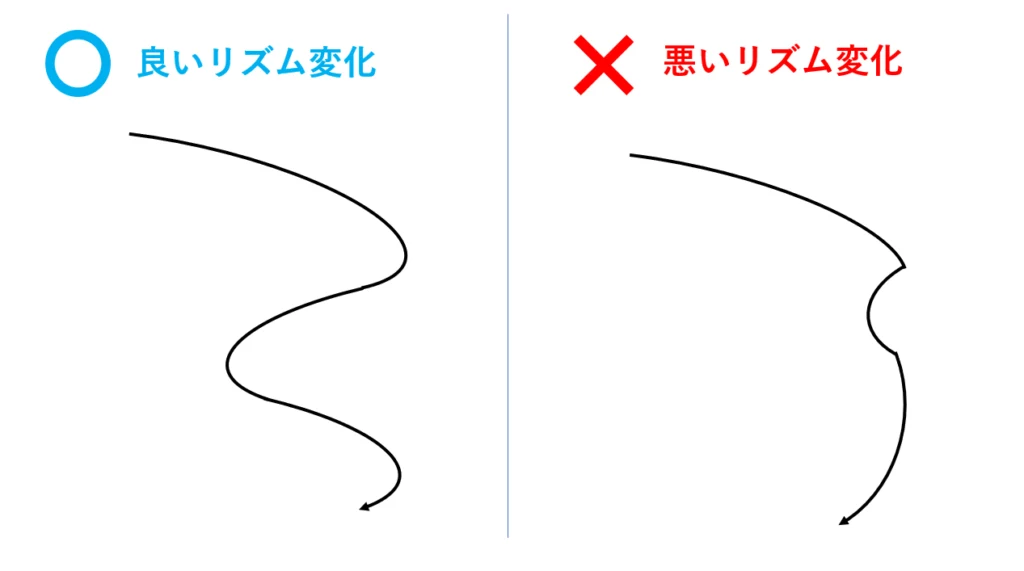
From long-radius turn, the speed is down and short-radius turn is suddenly required with very high technology, so it's not recommended in testing.
Besides, There is no need to use the rhythm changes/changing the turn rhythm. 1 ・ 2 If you go back, it’s okay!
So, The long-radius turn is a small risk, and the rhythm changes/changing the turn rhythm are OK!
a free run combining turn sizes and rhythms (Japanese test event)
3The second point is "Acting composition" That's it!
Basically, the composition is free and you can see the quality of turn or rhythm changes/changing the turn rhythm so that the composition alone will not change so much.
Use slope evenly
That is important!
To put it in an extreme way,
It’s not easy to use the right half of slope.
Together with rhythm changes / changing the turn rhythm,
Acting that uses slope extensively Let's keep this in mind and get a passing score ^ ^
Tips for getting a high score in ski proficiency test SAJ Level 1 and a free run combining turn sizes and rhythms (Japanese test event)
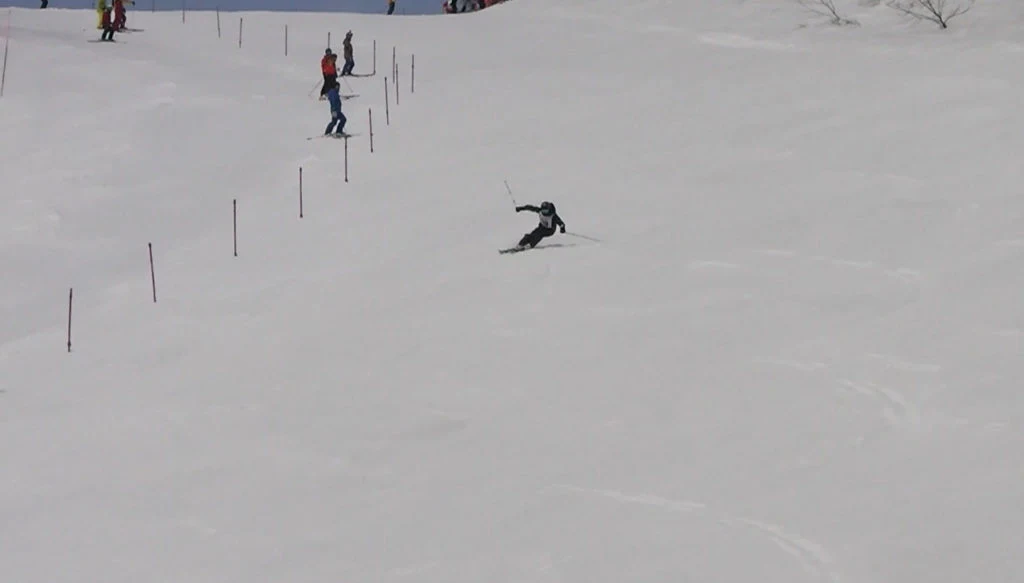
To get a high score on a free run combining turn sizes and rhythms (Japanese test event),
I have some tips to share with you!
If you do this, I will definitely! Not to say, please see the reference. )
In conclusion, there are 2 points.
- Finish with long-radius turn or medium-radius turn
- Add a configuration to move slope from end to end
First of all, to emphasize the sense of speed,
Finally “Achieving the goal with long-radius turn or medium-radius turn” That's it!
Of course, this is not fixed either!
Even if you finish with short-radius turn, you will get a high score, but SAJ Level 1 is better to get a goal at the speed. Well well.
And the other thing is
"Include a configuration to move slope from end to end." That's it!
What does this mean?
If the bar is wide, adding rhythm changes/changing the turn rhythm, the composition that crosses the bar bigly can give a good impression that it is fully used!
When testing on particularly difficult burns,
Reduce risk by holding traverse longer There is also a technique called.
So,
Here are some tips to get a high score on a free run combining turn sizes and rhythms (Japanese test event)...
- At the end, speed up and reach the goal
- Use burn across as wide as possible
That's what it means!
Because these are just technical.
The low level of putting body weight on the skis is difficult to finish, even if you try hard to make a composition.
Please be careful!
[Summary] a free run combining turn sizes and rhythms (Japanese test event) of ski proficiency test SAJ Level 1
Now, here's the summary for this time!
- Connect speed to the end
- rhythm changes / changing the turn rhythm that does not decelerate
- For configuration, use slope as much as possible
So,
This time we have explained the new SAJ level 1 test title 'a free run combining turn sizes and rhythms (Japanese test event)' points!
The total sliding is free to slide and good point, without the points to be kept, there may be enough that it was not wrong but unqualified.
So let’s keep the points you need to pass before training and make sure that we are getting it out!
-
 Mastering ski proficiency test SAJ Level 1 long-radius turn! Explaining Frequently Overlooked Points and Tips for PassingSAJ Level 1 long-radius turn... What's the difference from a SAJ Level 2 long-radius turn? It's the same long-radius turn, but the slope is steeper and longer, so I'm not sure exactly what the difference is. I bet many people think that way...
-
 Break through the short-radius turn of ski proficiency test SAJ Level 1! The decisive line between success and failure was right here!?short-radius turn is not good at it... Many people probably feel that way! So, let me secretly share short-radius turn you get a passing score on SAJ Level 1... Among ski proficiency test SAJ Level 1 examinees, there are those who struggle with short-radius turn subjects...
-
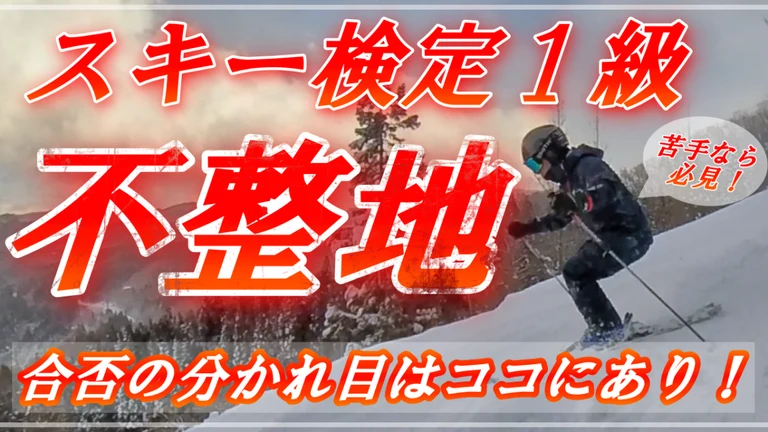 The Turning Point Between Passing and Failing uneven terrain short-radius turn ski proficiency test SAJ Level 1 [A Must-Read for Those Who Struggle with mogul / bump!] 】SAJ ski proficiency test final challenge! Overcome the mogul / bump! This time, it's 'ski proficiency test SAJ Level 1 uneven terrain short-radius turn'! This article is recommended for people like this! I'm so scared I slip off the line right away. I didn't fall...
感想や質問があればお気軽にどうぞ!
1件のコメント