 Naoki
Hello everyone!
I’m Naoki, a Japanese skier who gives skiing his all for life. I specialize in Japan’s SAJ ski tests and have helped many skiers pass.
This time, Movement of transition of skiing About,
I would like to explain it!
Suddenly,
What is the “ideal transition” for you?
What kind of transition is it?
There are several methods for transition,
“There is no pressure and a transition to the next turn.”
Isn't that ideal?
Regarding transition,
This has been a long-standing challenge for me as well. (I mean, even now lol)
This time, through trial and error,
We will talk about the most interesting “transition sensation”!
If you can learn the contents of this time,
transition can be made without releasing pressure,
You can get the next weight to your next valley!
Before we get into the details,
I found a very good video that is referring to the transition on Instagram of Mr. Yuan!
This is a slide, so let you use it to explain and then first look at the transition slide video of about 5 seconds.
What you should be aware of with skiing and transition is the length of the legs!
I'll tell you the conclusion right away,
What are the points at transition?
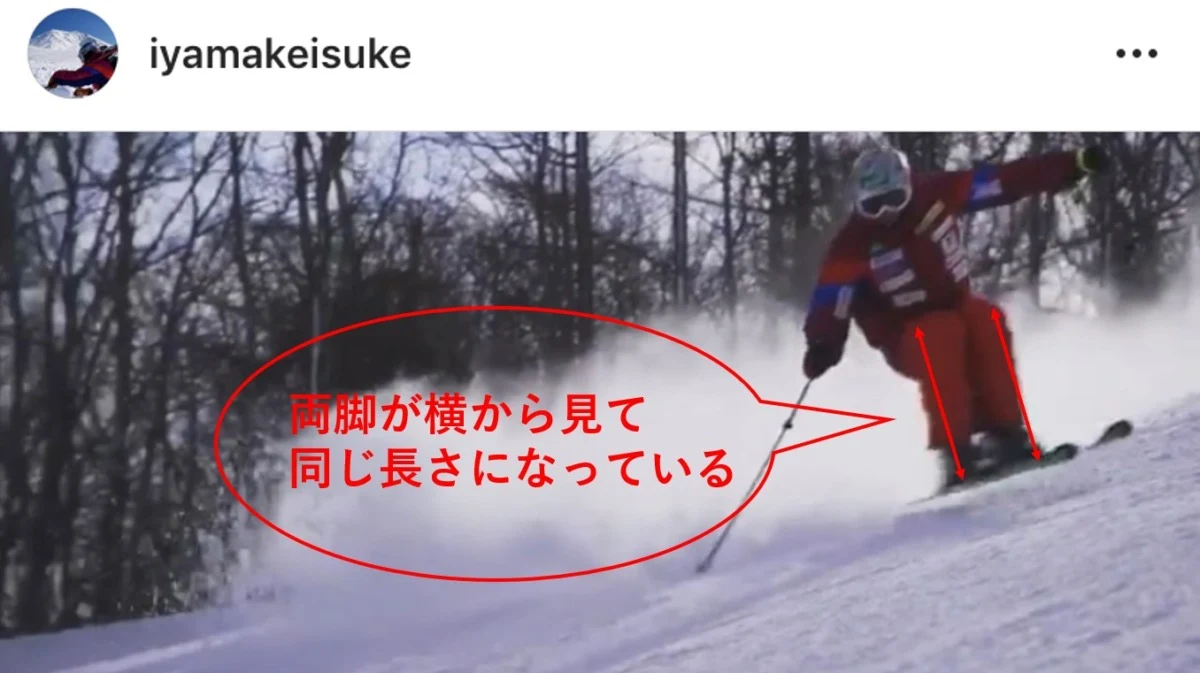
"Make both legs the same length"
This alone may be a little difficult to imagine, so try the image of your feet when you see transition from side.
"Align the length of both legs when viewed from the side"
The key to transition is that it does not release pressure.
That's all!
Illustrated by Mr. Iyama's skating, it looks like this▼
If you do not, the good people may only get something.
Since it is a great opportunity,
I will give you a little more detailed explanation!
movement of the center of mass when skiing is transition
transition of skiing is
movement of the center of mass up to transition holds the key.
In the second half of the turn ~transition,
Movement to gradually move center of mass towards downhill foot / downhill leg / downhill ski is important.
At transition,
"Neutral position"
In other words, center of mass is between your legs Let us move on the side of the valley in order to come.
To be more specific,
Make sure your hips are directly above your legs
It's important to keep it moving.
To make both legs the same length when viewed from the side
First, take your seat on both legs.
From the end of the turn, we move the seat toward the valley until the side gradually comes up to the bottom of the board.
Here is a summary of movement of the center of mass around the valley so far!
- In the second half of the turn, move center of mass towards the valley side.
- Set to "neutral" when transition
- The neutral point is
- “Center of mass is the center of both legs” and “the back is above both legs.”
About edge angle degree of skiing at the second part of a turn, after the fall line ~ transition
Now let's change our perspective,
ski edge angle I'll pay attention to.
In the second half of the turn,
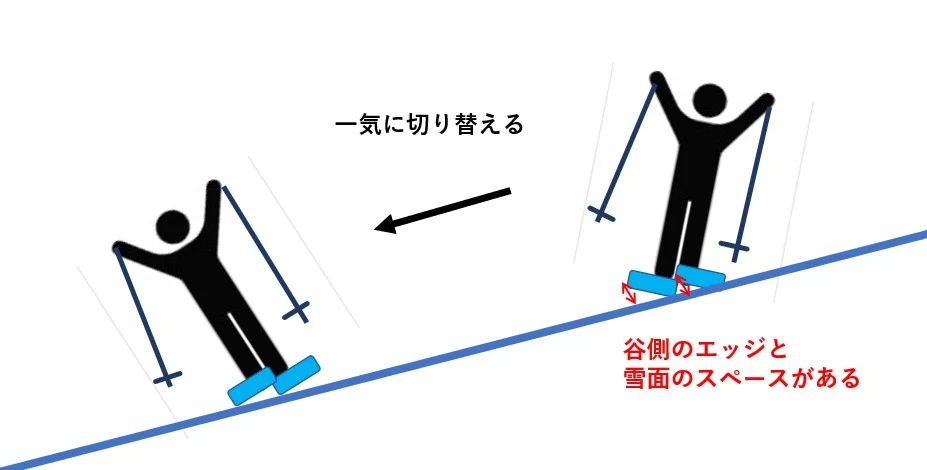
From the bottom, the ski edge on the mountain side stands. The ski edge on the bottom of the valley is floating.
From there the ski edge on the valley is floating and "one-time" transition will not be a smooth transition.
In transition,
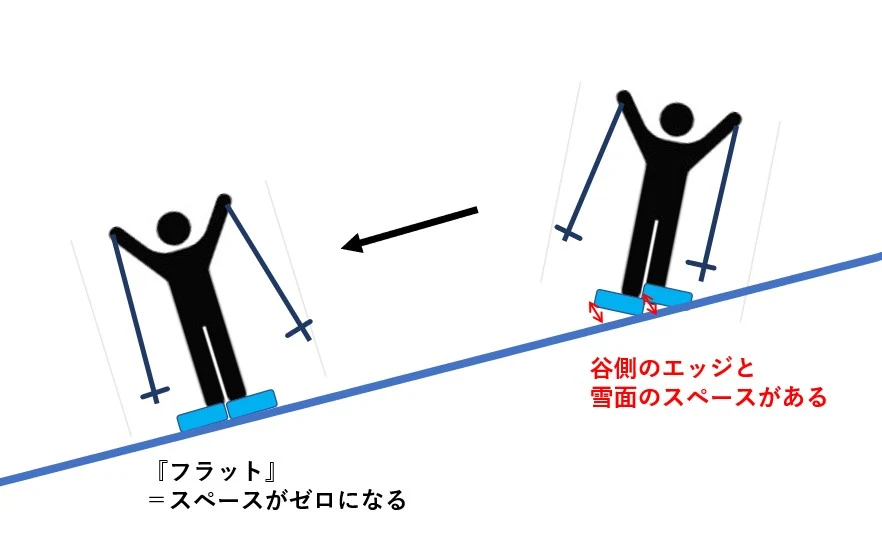
board once "Flat" Let's do it!
What is flat?"ski edge not standing" It means.
By paralleling the angle of the board with slope, ski edge will be completely removed.
Gradually loosen the angle of ski edge,
Let's do movement of the center of mass until it becomes completely zero!
The zero here is
The ski edge and snow surface space are completely disappearing. That's it!
Hip direction during transition of skiing turn
We will talk about the “transition” time.
In the second half of the turn,
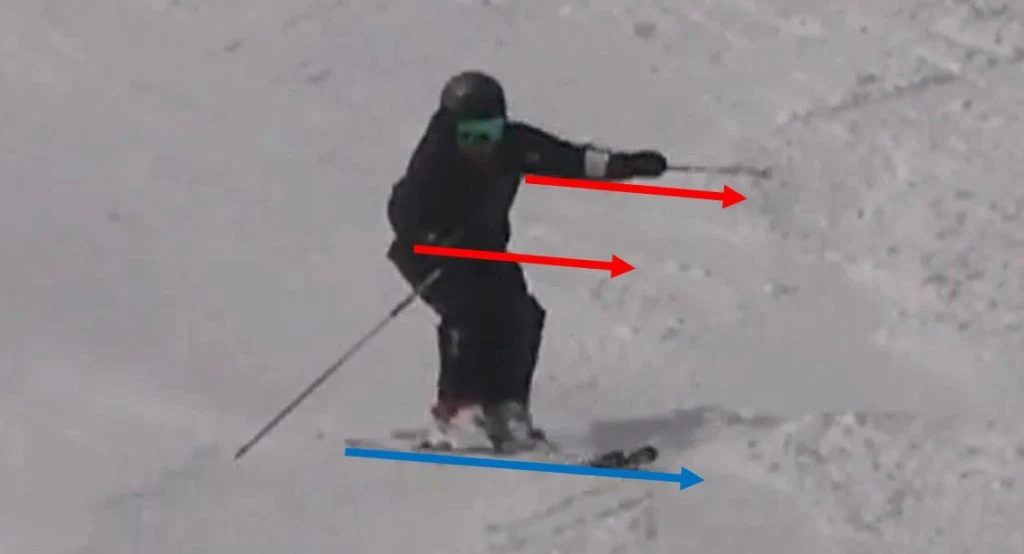
Having your hips directly facing each other creates more propulsion.
Therefore, align your hips in the direction of movement.
In other words, it is the same direction as skiing.
Just a note of caution:
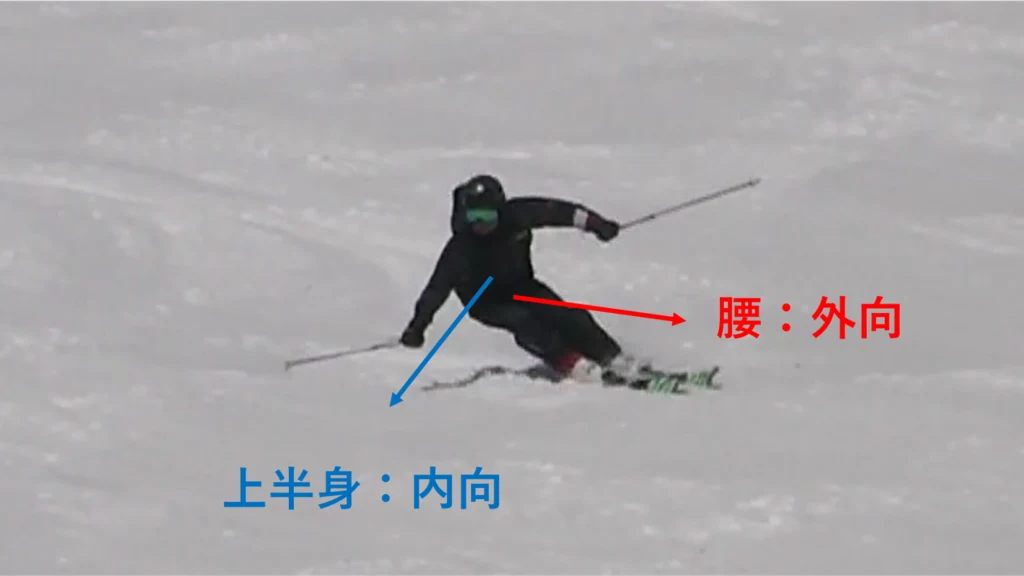
Let's not face the same direction until upper body!
When upper body turns to the same direction as the board,
In the next round, it will be difficult to drop the center of mass in the valley.
In other words...
Since the "direction of the waist" and "direction of the upper body" are different, Twisted state at the upper body and waist That's how it works.
It's a little difficult to explain, but
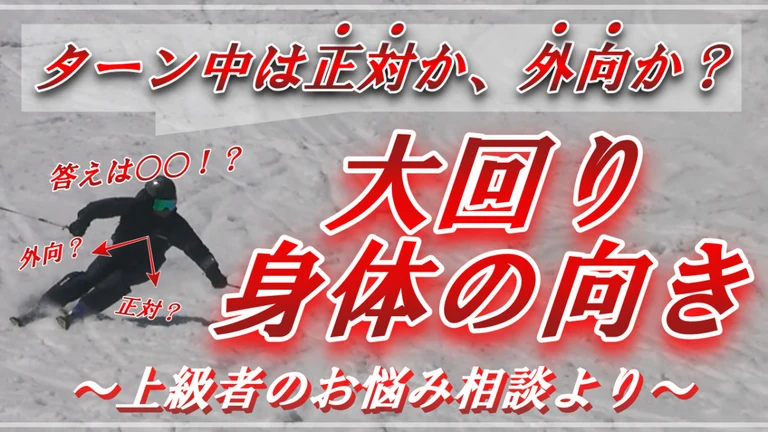
The difference between the back and upper body is explained in this article!
About the movement after turn transition
After the transition we will go to the next turn around the valley.
There is a 2 pattern for how to enter the turn.
- center of mass remains low
- Return center of mass to a higher position
① Enter the turn with center of mass low
It is called a ping-tone movement.
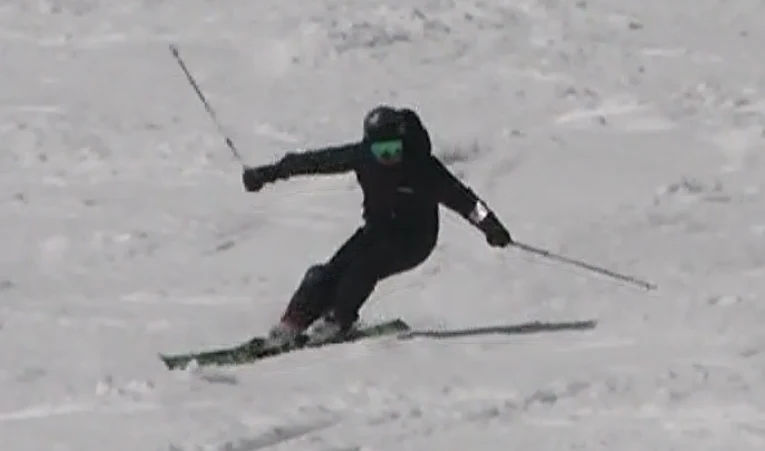
Make both legs the same length with transition,
After making a low position and transition, we go to the next turn at the same height.
It sticks to the snow surface all the time,
It has the advantage of giving you a sense of stability!
② Return center of mass to a high position and enter the turn
The other is the slide to return the center of mass to a high position after transition.
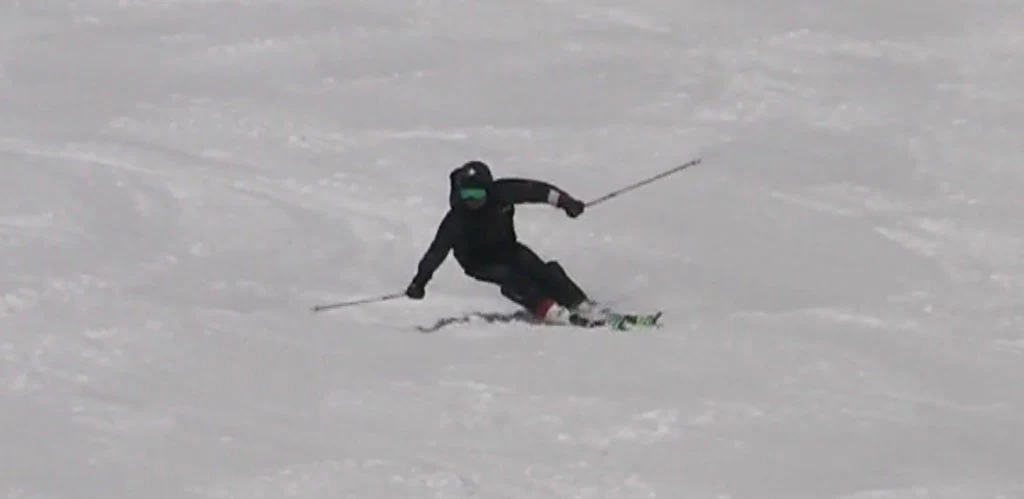
If center of mass starts the turn from a high position,
- You can use the tilt of your body axis!
- Your body will look longer and your silhouette will improve!
- You can ski without using unnecessary force!
There is a lot of Mercury!
At the tests and congresses, high-speed performance is required so it is recommended to return the center of mass to a high position in the valley round and take a standing position for the back to stand pressure!
[Summary] transition of skiing turn
So, here's the summary!
In transition…
- Make both legs the same length!
- center of mass should be in the center of both feet!
- Make sure your hips are directly above your legs!
- Completely eliminate the space between ski edge and the snow surface on the valley side!
After transition...
- center of mass remains low
- Return center of mass to a higher position
So,
This time I have explained about the turn transition!
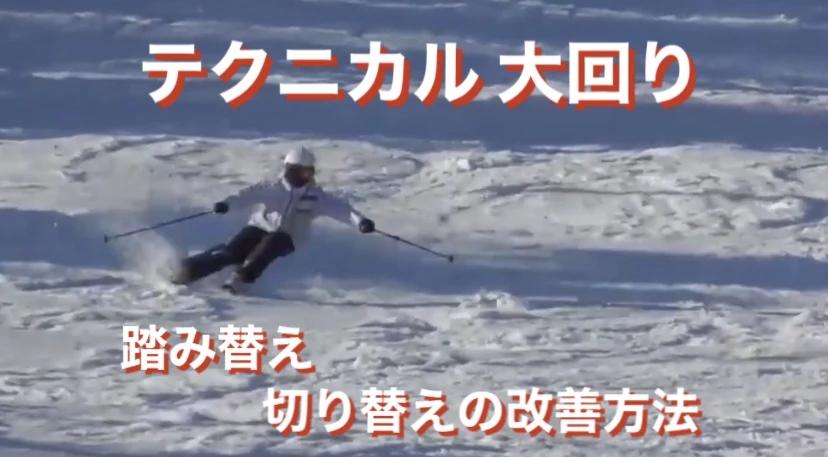
Previously, in a customer's video advice,
「SAJ Technical Passing for Transition Steps to Improve Operations I’m also telling you, so if you see it together, we will be more effective to take a PRICE test!
That's it for now!
Master this content,
With a heavy transition, let us increase the turn-speed!
Please watch until the end,
Thank you very much!
感想や質問があればお気軽にどうぞ!
2件のコメント