 Naoki
Hello everyone!
I’m Naoki, a Japanese skier who gives skiing his all for life. I specialize in Japan’s SAJ ski tests and have helped many skiers pass.
Stability of sliding
This is a point that is often mentioned especially in exams!
- I know that stability is important, but what do you really need to do?
- Even though I ride the outside foot / outside leg properly, I am told that it does not feel stable.
Are there many people who are concerned about this?
This time, we will be reduced to just one point and tell you how to get a sense of stability from another angle that you have never seen!
The true nature of the sliding stability of skiing
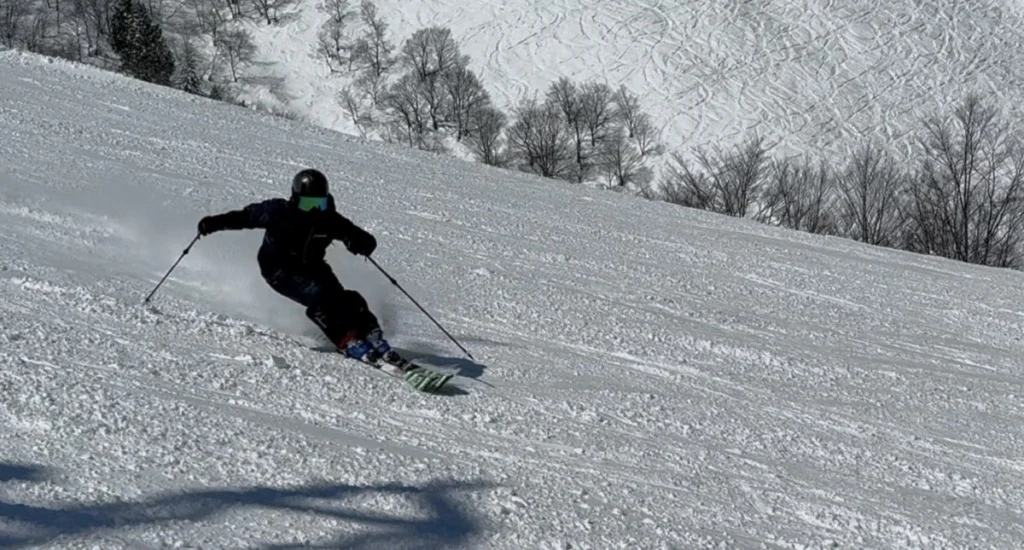
Now let's get to the main topic.
What is the often talked about sliding stability of skiing?
What is the point and what kind of movement is required?
Here, I will just give you the quick answer!
Let's go!
Click here to find out the true nature of sliding stability!
- Correct outside foot / outside legputting body weight on the skis
- Perfect parallel turn
Among these 2,
outside foot / outside leg putting body weight on the skis is probably a basic explanation that many of you have ever heard. 2 The eye.“Perfect” We will focus on explaining parallel turn!
First, let’s make a mild look at outside foot/outdoor leg putting body weight on the skis and then explain the perfect parallel turn!
Correct outside foot / outside legputting body weight on the skis in skiing
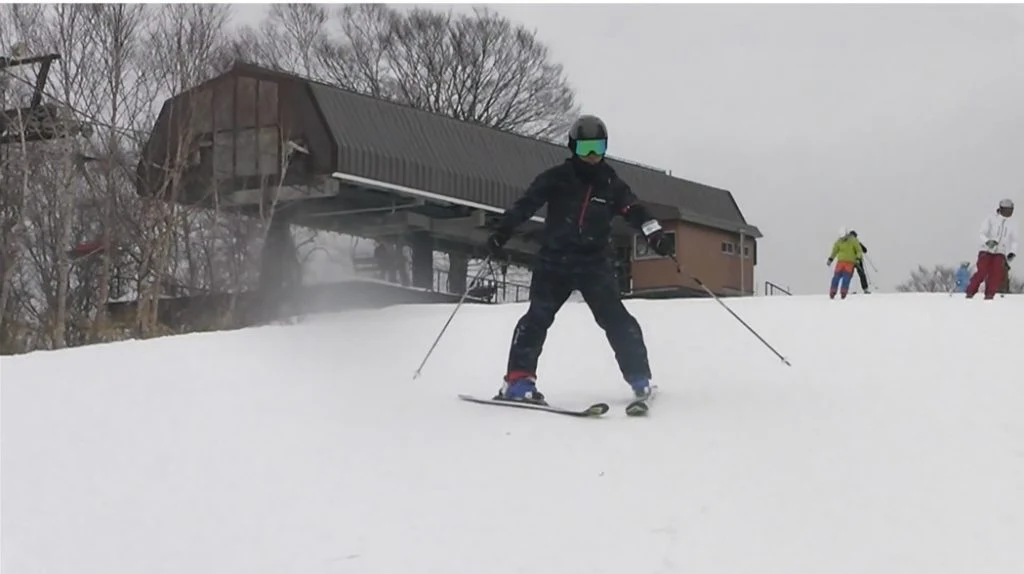
First, let's review the basics of outside foot / outside legputting body weight on the skis.
First of all, I would like to say...
"Please don't lick this area! ”
First, if you don’t make this perfectly and you can also put the entrance to give a sense of stability so practicing the later explanation will be absolutely meaningless!
Now, the basics of outside foot / outside legputting body weight on the skis...
To do outside foot / outside legputting body weight on the skis
External tilt with the correct movement and enough movement!
That's all in a nutshell!
I have explained this in the past article of Cochila, but...
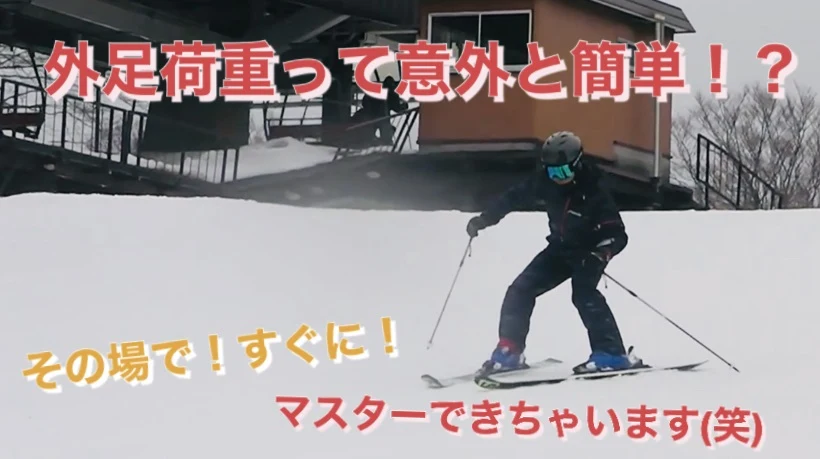
Also, to put it simply,
Go to the outside foot/outdoor leg and go with your outer shoulders.
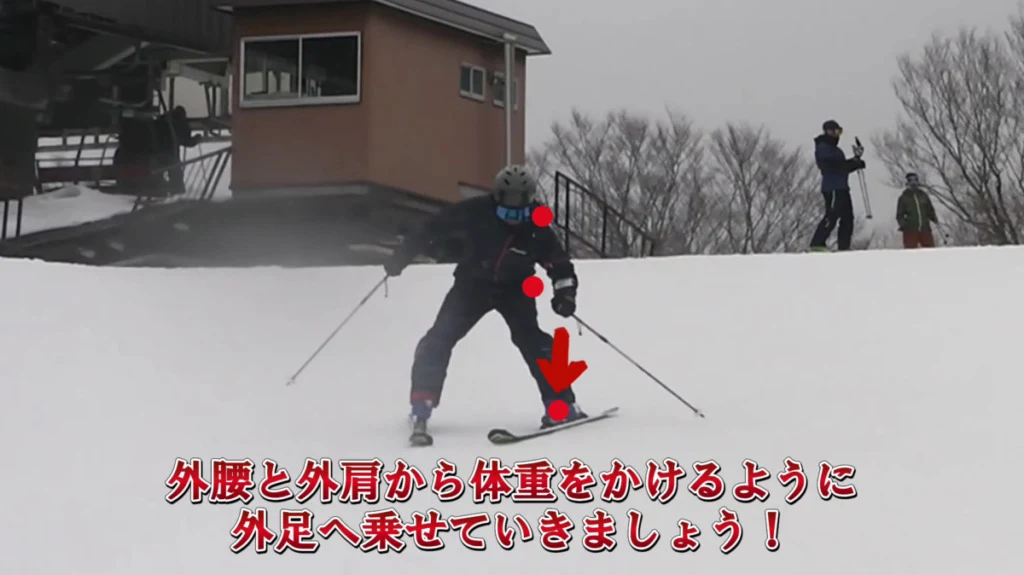
This movement is the basics of outside foot / outside legputting body weight on the skis!
Of course, without this, there will be no sense of stability!
I'll repeat it again
To do outside foot / outside legputting body weight on the skis
External tilt with the correct movement and enough movement!
And one thing I have to explain.“Amount of movement” About it!
Unfortunately, most of the people who I’m giving you a ski advice are not enough to putting body weight on the skis outside foot/outdoor leg!
In other words...
- movement of the center of mass is too small!
- Even though I thought I was moving, it wasn't enough!
As a correct indicator that you are moving properly
Until your head, outer shoulders, and outer hips are directly above outside ski!
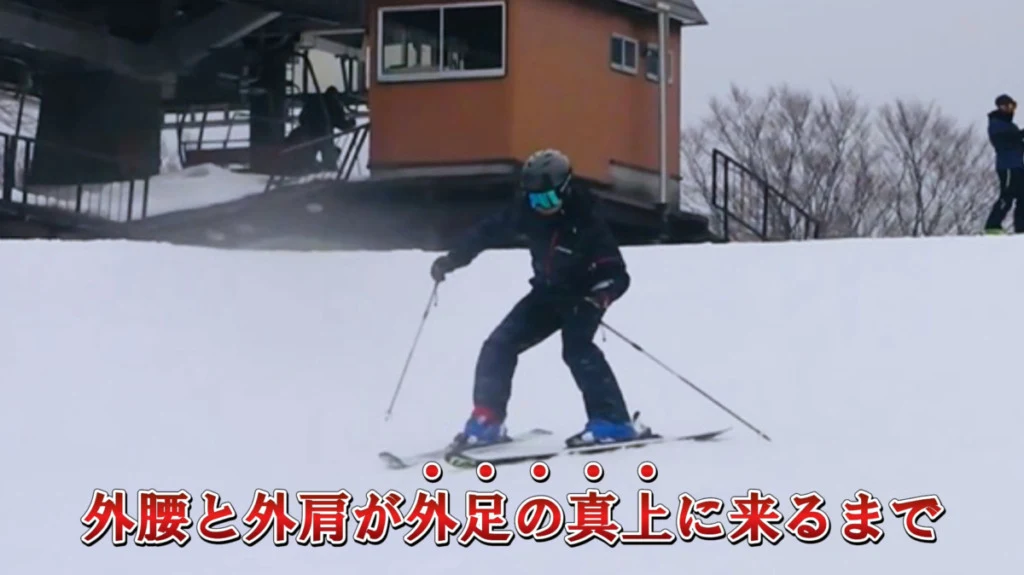
You need to move so fast, so try it yourself!
This is a basic review of outside foot / outside legputting body weight on the skis!
Whoever is not enough to come back and check the move, let’s go on!
Perfect parallel turn in skiing
So the next point is
The perfect parallel turn. What is it?
At first glance, it doesn't make sense, but if you explain it in detail,
“Both skiing must be aligned at all times during the turn.”
That's what it means.
I think it's easy to imagine,
The two skies are always well together and you can easily take balance and stable and slide even in the rough bar!
- No...it still doesn't make sense!
- I'm just stating the obvious!
Those who feel that way,
Are you able to do it to the point where it really feels like a natural thing to do?
The important thing is...
Keep both skis aligned at all times
In other words, both skiing
- Direction
- angle
- Front/rear (high/low) position
And so on, these are all in place!
Send your own skiing to the com, and look at it for a moment, is it open or sheren or X-foot?
This will lead to an unstable sliding, so let us improve here and feel more stable!
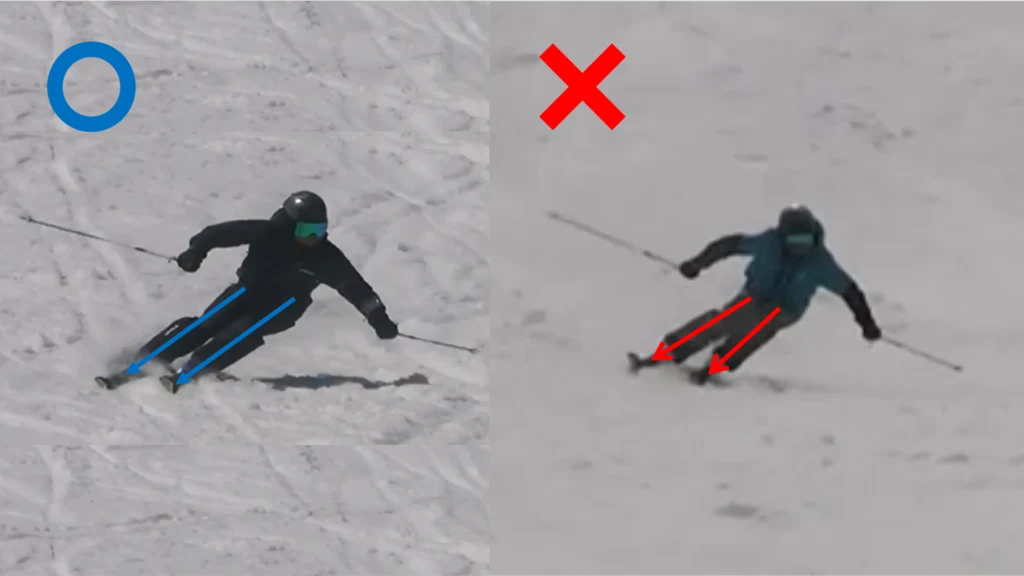
What do you need for that?
The purpose of this article is to help you get this hint!
There!
This is what I especially want to tell everyone!
Height difference and front/back difference
This is 2 It’s just the way you see the turn, so think the same thing.
Here is the image!
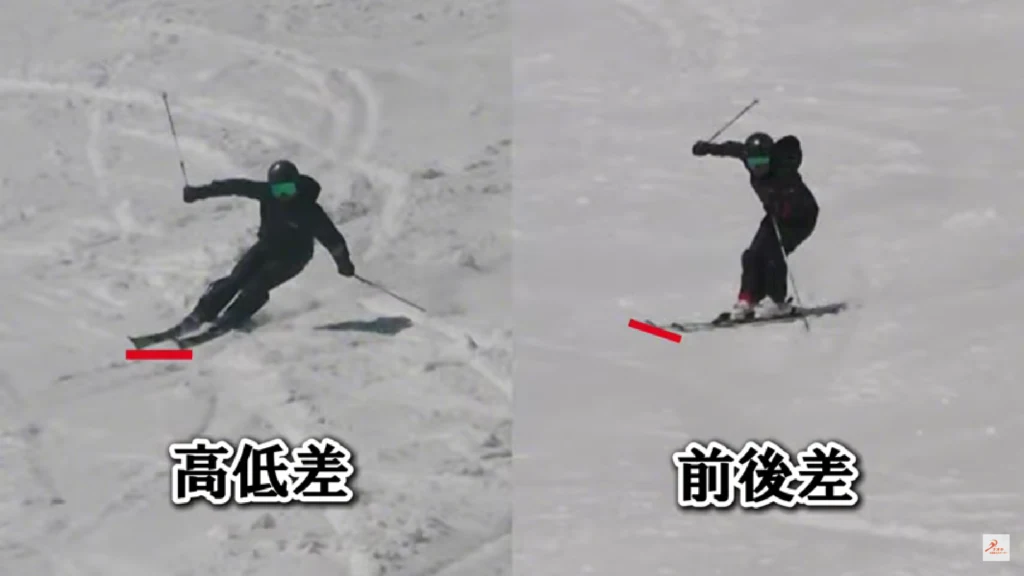
It's OK if you think of it as the top position!
This is an explanation from a sudden angle that has never heard of increasing the stability of the turn by combining the top positions of both skies during the turns.
How do you get outer ski and inside ski?
Let's take a closer look at the movements!
How to match the front and back difference and height difference of skiing
In particular, the parallel of skiing is easy to collapse. Valley part in the first half of the turn That's right.
If there is a height difference here...
In many cases, inside foot / inside leg comes forward.
X-legs appear as a result of doing sharen.
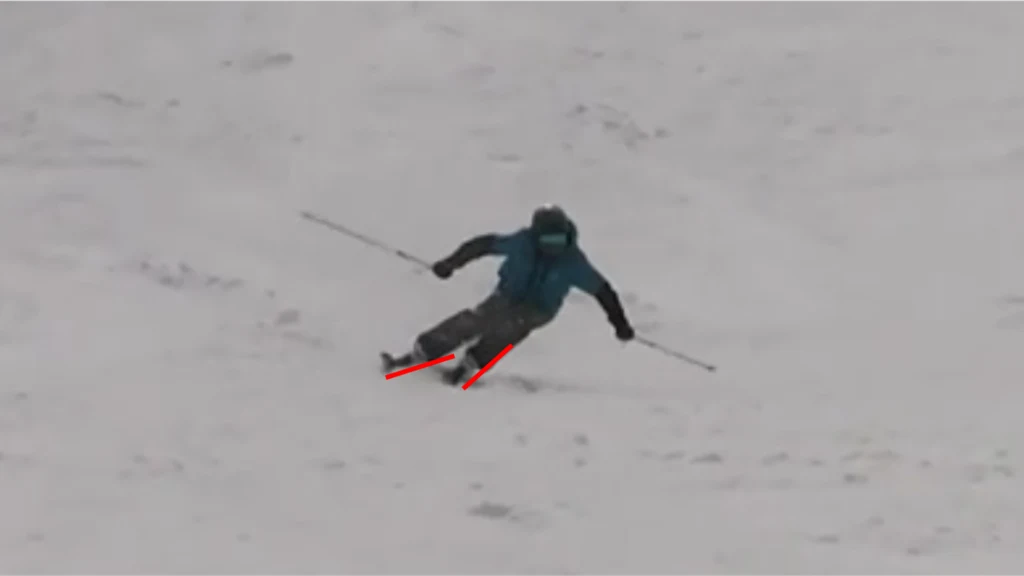
So the important thing is
Eliminate height differences during turns!
Just being able to do this
It really increases the stability of turns!
The important thing in eliminating this height difference is
Take outside foot / outside leg as the lead and go to match inside foot / inside leg!
The basis of the turn is to putting body weight on the skis, so that in order to prevent this outside foot/outdoor leg movement, inside foot/interior leg needs to make all angle, direction and high low differences together with the movements of outside foot/outdoor leg.
It is the inside foot/inner leg.
pull while lifting
By doing this, skiing will be completely aligned with outside foot / outside leg.
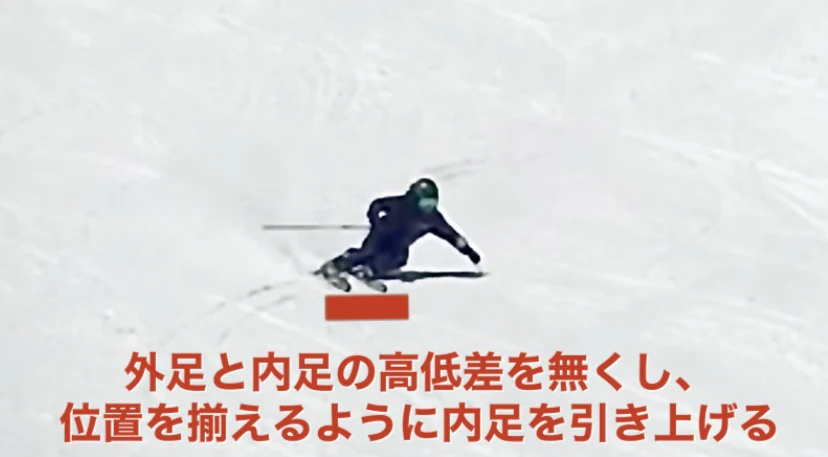
If this move is not done, the inside foot/interior leg will go out in front and the high-end gap of ski edge will be shattered.
It is the way to lift and pull inside foot.
Fold hip / hip joint of inside foot / inside leg This is an expression.
But it’s quite a bit of image, so we recommend training that you will float the belt of inside foot/interior leg to get this feeling and put the top on the snow surface!
Let’s try with a movement image that is like breaking the banes between your stomach and thigh!
This...try it
If you don’t have the hip/hip joint, it will not be good!
I think the flexibility of hip/hip joint is not much to be aware, so there’s a big difference in these ski operations by doing regularly thigh lifting stretches or pushing the massage gans while extending the mobility area of hip/hip joint!
Not only the use of inside foot/interior leg but also putting body weight on the skis as well as the basis that you can carry weight from hip/hip joint.
It is very important to keep hip / hip joint soft
That's it!
[Summary] How to create a sense of stability when sliding on skiing
Now, here's the summary for this time!
- The element needed to get a turning stability is the outside foot/external leg putting body weight on the skis’ basic and perfect parallel turn.
- The outer foot/outer leg putting body weight on the skis is a movement of the center of mass.
- The perfect parallel turn is the twist that both skies are always in direction, angle and position.
- This means that you lose the high and low gap. With the inside foot and the inside leg, both skies are perfectly aligned.
How did you feel that?
This time we have explained the turn stability by increasing the accuracy of parallel turn from the front-back and high-low gap angle!
If you have any questions or new insights
Please leave a comment and I will reply!
That's all for this time!
NaokiPlease watch till the end
Thank you very much!
感想や質問があればお気軽にどうぞ!
0件のコメント